Skip To Content
  • About Us
  • Our Impact
  • Policies
  • Faculty & Staff
Universities of Wisconsin Universities of Wisconsin

All In Wisconsin

All In Wisconsin

    • News by University
    • UW-Eau Claire
    • UW-Green Bay
    • UW-La Crosse
    • UW-Madison
    • UW-Milwaukee
    • UW-Oshkosh
    • UW-Parkside
    • UW-Platteville
    • UW-River Falls
    • UW-Stevens Point
    • UW-Stout Polytechnic
    • UW-Superior
    • UW-Whitewater
  • Newsletter
  • Share Your Story
Search scope

Please enter a search term.

  • About Us
  • Our Impact
  • Policies
  • Faculty & Staff
  1. Universities of Wisconsin
  2. All In Wisconsin
  3. Campus Stories
  4. Orchid’s hidden partner: Graduate research compares modern and historic orchid-fungi relationships across Wisconsin, Michigan 
Campus Stories

Orchid’s hidden partner: Graduate research compares modern and historic orchid-fungi relationships across Wisconsin, Michigan 

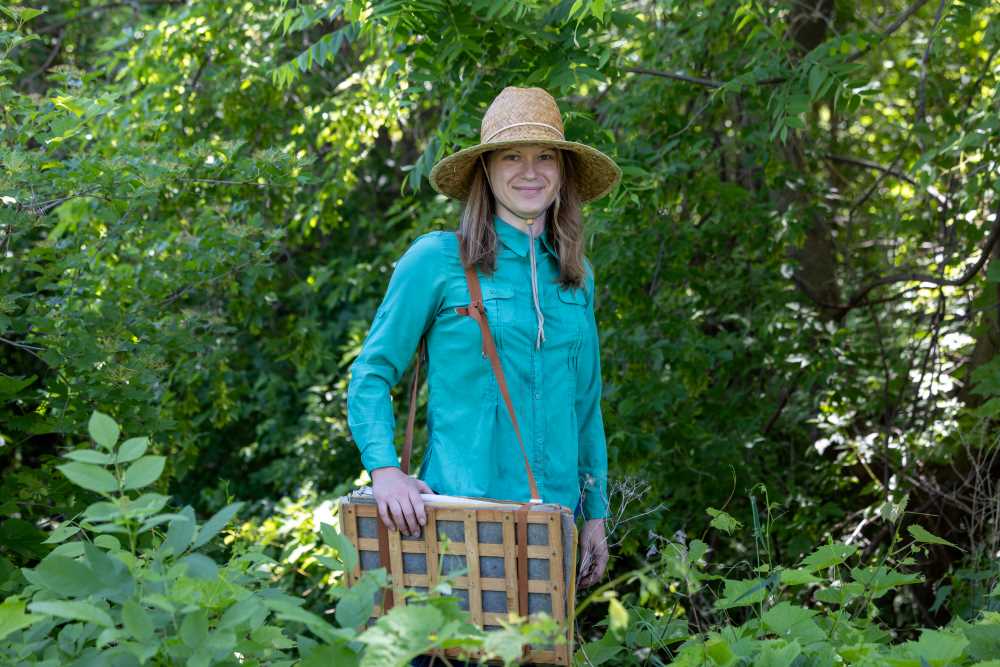
Photo: Beginning her second year in UWL's biology graduate program, Sadie Hickey is a UWL College of Science and Health graduate research fellow.
Beginning her second year in UWL’s biology graduate program, Sadie Hickey is a UW-La Crosse College of Science and Health graduate research fellow.

Sadie Hickey is spending her summer trekking through Wisconsin’s wetlands and forests—through poison sumac, towering sedges and other rugged terrain. The College of Science and Health Graduate Research Fellow is in search of an elusive native wildflower: the pink lady’s slipper orchid.

It’s a long way from the sunny, dry climate of her native California. But Hickey chose to pursue graduate studies at UW-La Crosse because of its nationally-respected reputation in plant and fungal biology. She also credits the legacy of the late UWL mycologist Tom Volk, whose research helped establish the university as a destination for fungal studies.

“I’m thankful for the research environment here, and I’m thankful that I don’t have to go to a big city for it,” Hickey says.

Beginning her second year in UWL’s biology graduate program this fall, Hickey is studying one of nature’s hidden partnerships.

Her master’s thesis compares pink lady’s slipper orchids growing in different habitats across Wisconsin and Michigan while also looking back nearly a century. By extracting DNA from preserved orchid specimens collected in the 1930s and stored in herbaria — scientific collections of preserved plants used for research — she can study not only the orchid’s DNA over time but also traces of the fungi living within it.

Those fungi are far more than invisible passengers. Fungi recycle nutrients, support healthy forests and form underground partnerships that help many plants survive. In the case of the pink lady’s slipper orchid, they’re essential from the very beginning. Unlike most plants, the orchid’s tiny seeds cannot germinate on their own. Instead, they rely on fungi to provide nutrients until the young plant can grow independently.

Her research could provide one of the first opportunities to compare historical and modern fungal communities associated with orchids, helping scientists better understand what this native plant needs to survive.

“This is proof of concept because this type of use of herbarium specimens is fairly new,” Hickey explains. “Can we use these specimens to make inferences about past conditions and compare them with modern data? No one has done this with orchids before.”

The project recently earned Hickey the John Thomson Research Award from the Botanical Club of Wisconsin. Her work is also supported through UWL’s Research, Service and Educational Leadership (RSEL) grant program.

Working with nearly century-old specimens

Much of Hickey’s research depends on botanists who collected and preserved plants decades ago.

Today’s technology allows scientists to extract DNA from specimens gathered nearly 100 years ago — something those original collectors could never have imagined. Yet Hickey worries future scientists may have fewer opportunities because many plant observations are now documented only with photographs.

“I want to contribute to the body of physical knowledge we have,” Hickey says. “There has been a big decrease in people collecting physical specimens because it’s so easy to take photos. But a photo can’t replace a physical specimen.”

That’s why Hickey carries a traditional plant press into the field, preserving specimens from a variety of species for the UWL Herbarium so that they may one day help answer scientific questions researchers haven’t even thought to ask.  

“I love Sadie’s enthusiasm for science, for biology, and it’s especially fun to work with her on a project that blends her interests in botany and mycology,” says UWL Associate Professor of Biology Adam Schneider, her advisor. “I’ve been impressed with Sadie’s resilience when faced with the natural challenges and setbacks of scientific research.”

So far, Hickey has revisited about 17 historic collection sites across Wisconsin to compare modern orchids with their 1930s counterparts. She also collects soil samples to better understand how fungal communities vary among habitats.

While she doesn’t expect dramatic changes in the orchid’s fungal partners over time, the work could reveal how stable these ecological relationships have remained across generations. 

The research also fills an important gap in scientific knowledge. Few studies have examined fungal relationships in pink lady’s slipper orchids, particularly in the Upper Midwest, says Hickey. Better understanding fungal associations with the orchid can also help lead to better predictions about habitat suitability or restoration potential, adds Schneider.

“We spend a lot of time thinking about endangered species,” Hickey says. “But it’s also important to prevent species from becoming rare in the first place by better understanding their ecology.”

Hickey hopes the research experience will prepare her to earn a doctoral degree and eventually become a college biology professor.

Along with conducting research, she has gained classroom experience through a graduate assistantship, teaching undergraduate biology courses while pursuing her master’s degree.

“I love teaching,” Hickey says. “I don’t think it’s common to graduate from a master’s program with two years of teaching experience, and that’s what I’m going to do. This program has been a great opportunity, and I’ve been very well supported.”

For Hickey, the work ultimately comes back to protecting the ecosystems that support all life.

“The more biodiversity we have in an ecosystem, the more stable it is,” she says. “The more plants and fungi we have in Wisconsin, the better we’re able to support life here.”


Written by UW-La Crosse University Marketing & Communications

Link to original story: https://www.uwlax.edu/news/posts/orchids-hidden-partner/

Share this

Recents
Yearly
  • 2026
  • 2025
  • 2024
  • 2023
  • 2022
  • 2021
  • 2020
  • 2019
  • 2018
  • 2017
  • 2016
  • 2015
  • 2014
  • 2013
  • 2012
Monthly
  • September 2026
  • August 2026
  • July 2026
  • June 2026
  • May 2026
  • April 2026
  • March 2026
  • February 2026
  • January 2026
  • December 2025
  • November 2025
  • October 2025
  • September 2025
  • August 2025
  • July 2025
  • June 2025
  • May 2025
  • April 2025
  • March 2025
  • February 2025
  • January 2025
  • December 2024
  • November 2024
  • October 2024
  • September 2024
  • August 2024
  • July 2024
  • June 2024
  • May 2024
  • April 2024
  • March 2024
  • February 2024
  • January 2024
  • December 2023
  • November 2023
  • October 2023
  • September 2023
  • August 2023
  • July 2023
  • June 2023
  • May 2023
  • April 2023
  • March 2023
  • February 2023
  • January 2023
  • December 2022
  • November 2022
  • October 2022
  • September 2022
  • August 2022
  • July 2022
  • June 2022
  • May 2022
  • April 2022
  • March 2022
  • February 2022
  • January 2022
  • December 2021
  • November 2021
  • October 2021
  • September 2021
  • August 2021
  • July 2021
  • June 2021
  • May 2021
  • April 2021
  • March 2021
  • February 2021
  • January 2021
  • December 2020
  • November 2020
  • October 2020
  • September 2020
  • August 2020
  • July 2020
  • June 2020
  • May 2020
  • April 2020
  • March 2020
  • February 2020
  • January 2020
  • December 2019
  • November 2019
  • October 2019
  • September 2019
  • August 2019
  • July 2019
  • June 2019
  • May 2019
  • April 2019
  • March 2019
  • February 2019
  • January 2019
  • December 2018
  • November 2018
  • October 2018
  • September 2018
  • August 2018
  • July 2018
  • June 2018
  • May 2018
  • April 2018
  • March 2018
  • February 2018
  • January 2018
  • December 2017
  • November 2017
  • October 2017
  • September 2017
  • August 2017
  • July 2017
  • June 2017
  • May 2017
  • April 2017
  • March 2017
  • February 2017
  • January 2017
  • December 2016
  • November 2016
  • October 2016
  • September 2016
  • August 2016
  • July 2016
  • June 2016
  • May 2016
  • April 2016
  • March 2016
  • February 2016
  • January 2016
  • December 2015
  • November 2015
  • October 2015
  • September 2015
  • August 2015
  • July 2015
  • June 2015
  • May 2015
  • April 2015
  • March 2015
  • February 2015
  • January 2015
  • December 2014
  • November 2014
  • October 2014
  • September 2014
  • July 2014
  • June 2014
  • May 2014
  • April 2014
  • March 2014
  • January 2014
  • December 2013
  • November 2013
  • October 2013
  • September 2013
  • August 2013
  • July 2013
  • June 2013
  • May 2013
  • April 2013
  • March 2013
  • February 2013
  • January 2013
  • December 2012
  • November 2012
  • October 2012
Universities
  • Freshwater Collaborative of Wisconsin
  • Universities of Wisconsin
  • UW Colleges
  • UW Extended Campus
  • UW-Eau Claire
  • UW-Extension
  • UW-Green Bay
  • UW-La Crosse
  • UW-Madison
  • UW-Milwaukee
  • UW-Oshkosh
  • UW-Parkside
  • UW-Platteville
  • UW-River Falls
  • UW-Stevens Point
  • UW-Stout Polytechnic
  • UW-Superior
  • UW-Whitewater
Categories
  • Community
  • Economy
  • Featured
  • Research & Innovation

Share your story

Are you or someone you know contributing to inspiring work at our public university campuses throughout Wisconsin?

Related Articles

  • Photo: UW- La Crosse Professor Tisha King-Heiden assists a camp participant during zebrafish lab.

    This summer, 24 high school students from across Wisconsin came together at UW- La Crosse for a five-day residential freshwater science camp. They deepened their understanding of freshwater ecosystems and made connections between environmental health and human health. The annual My River Adventures Camp is supported by the Freshwater Collaborative of Wisconsin and open to…

    September 15, 2026

    High school students explore freshwater science from the river to the lab

  • Photo: Participants in the 2026 Data Analysis and Monitoring Crew (DAM Crew) gather ecological data in the Kinnickinnic River in River Falls. Five UW-River Falls students, one UW-Milwaukee student and two UWRF student interns participated in the fifth year of the program July 20-31, supported by funding from the Freshwater Collaborative of Wisconsin. Photo courtesy of the City of River Falls.

    For a fifth year, students from Universities of Wisconsin campuses stepped into the Kinnickinnic River in River Falls to gather data that tracks the ecological health of the river in advance of an expected dam removal project. The students spent two weeks working with University of Wisconsin-River Falls faculty on the Dam Analysis and Monitoring Crew, DAM Crew for short, before wrapping up the program with a group presentation of their work…

    September 14, 2026

    University students get hands-on experience monitoring Kinnickinnic River in River Falls in advance of dam removal project 

  • Photo: A UW-Platteville team won top honors in horticulture at the 2026 North American Colleges and Teachers of Agriculture Annual Judging Conference at Heartland Community College in Normal, Illinois, in April. Front row, L-R: Kendra Downing, Martha Guelker and Lauren Carlson. Back row, L-R: Jenna Dervis, Cora Brooks, Dr. Michael Compton (coach), Amy Luginbuhl and Luis Avila Vette.

    A UW-Platteville team has captured top honors in horticulture at a premier national agriculture competition for the first time. Seven students studying subjects ranging from environmental horticulture to agribusiness traveled to Heartland Community College in April along with coach Michael Compton to compete in the North American Colleges and Teachers of Agriculture Annual Judging Conference.…

    September 11, 2026

    UW-Platteville squad captures first top finish at national agriculture competition

Universities of Wisconsin
Office of Public Affairs, Communications, and Branding
Madison, WI 53706

universityrelations@wisconsin.edu

  • News by University
  • Newsletter
  • Share Your Story
  • About Us
  • All In Wisconsin
  • Our Campuses
  • Board of Regents
  • Office of the President
  • Offices
  • News
  • Contact Us
  • All Sites
  • Employee Intranet

© 2026 Board of Regents - University of Wisconsin System. All Rights Reserved

  • Accessibility Statement
  • Privacy Policy