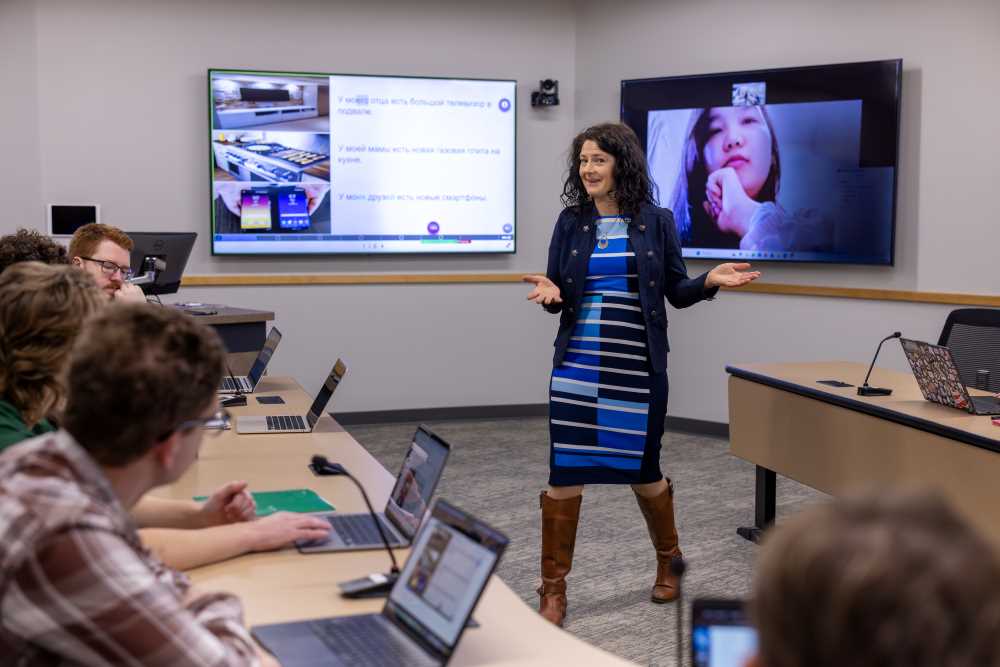
Instructor Natalia Roberts cheers for her students like a coach on the sidelines. In her classroom, encouragement sounds a lot like game-day advice:
Be brave.
It’s not about perfection.
With progress comes proficiency.
Would a coach let you play if you hadn’t practiced?
Roberts’ encouragement hasn’t fallen on deaf ears. Her students in the Russian Studies Certificate program have taken it to heart — and the results speak for themselves.
Nearly all students in the program achieve functional fluency in Russian within six semesters, and some reach that level two or even three semesters earlier. That accomplishment is especially notable because Russian is classified as a Category IV “hard language” by the U.S. Foreign Service Institute, meaning it requires significantly more time and dedication for English speakers to master.
Despite the challenge, students across the collaborative Russian language programs at UW–La Crosse, UW–Eau Claire, UW–Green Bay and UW–Stevens Point have achieved remarkable outcomes.
Since May 2023, more than 90% of Roberts’ students have passed the nationally recognized STAMP 4S language proficiency exam by the end of the six-semester program. To pass, students must score at least Intermediate-Mid (5+) in all four areas: reading, writing, listening and speaking.
That achievement qualifies students for the Global Seal of Biliteracy, an internationally recognized credential that verifies proficiency in two languages.
Many students reach that milestone early. Of the 40 students who have taken the test since 2023, 25% passed ahead of the six-semester benchmark — 12.5% three semesters early and another 12.5% two semesters early.
“I did not expect to learn Russian so quickly,” says UWL Junior Grechyn Baldner, who earned the Global Seal of Biliteracy in December after three semesters of Russian.
The collaborative program introduced the exam to ensure students graduate with a nationally recognized credential demonstrating their language ability.
Roberts, teaching professor and coordinator of the Russian Studies Certificate program, attributes the success to a combination of innovative tools, intentional teaching strategies and a classroom environment where students feel comfortable taking risks with the language.
Learning through encouragement and experience
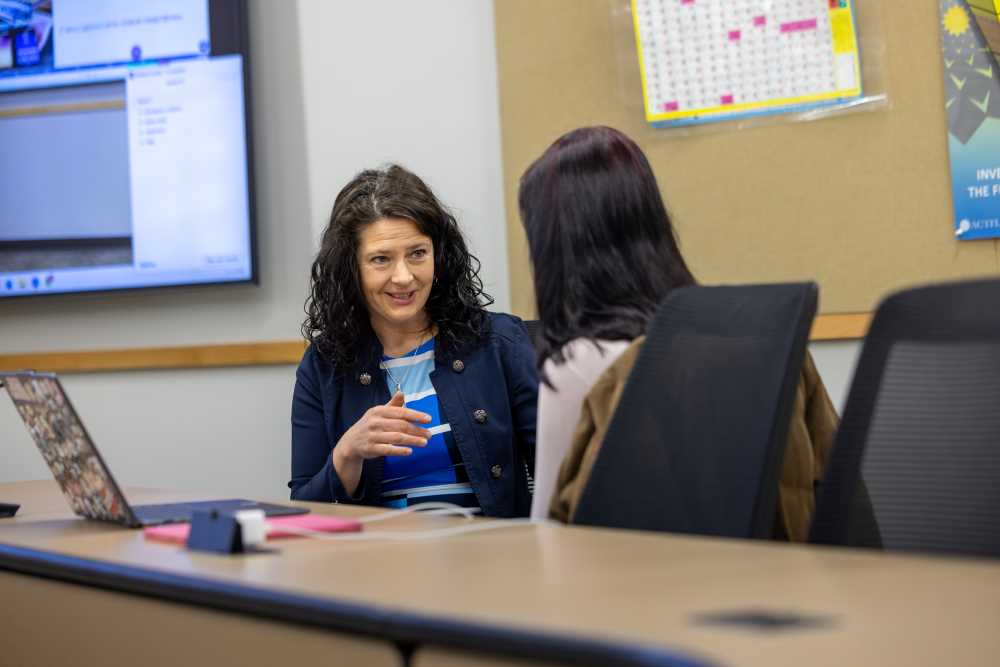
Roberts’ empathy as a teacher stems from personal experience.
Originally from Dubna, Russia, Roberts came to the United States to improve her English. Although she had studied British English, she quickly realized everyday American speech presented a new challenge.
“People were using a different accent and speaking so quickly,” she recalls. “The learning curve was steep.”
Even simple phrases could be confusing. For example, the expression “take a nap” didn’t translate logically.
“Why would you ‘take’ a sleep?” she says with a laugh. In Russian, verbs more directly describe the action rather than pairing verbs with nouns the way English often does.
Experiencing those challenges herself shaped her approach in the classroom.
“So, I can be an empathetic teacher because I went through the same thing on the other end,” she says. “Our motto is that language learning is not about perfection. With practice comes progress, and with progress comes proficiency.”
Innovative tools and teaching methods
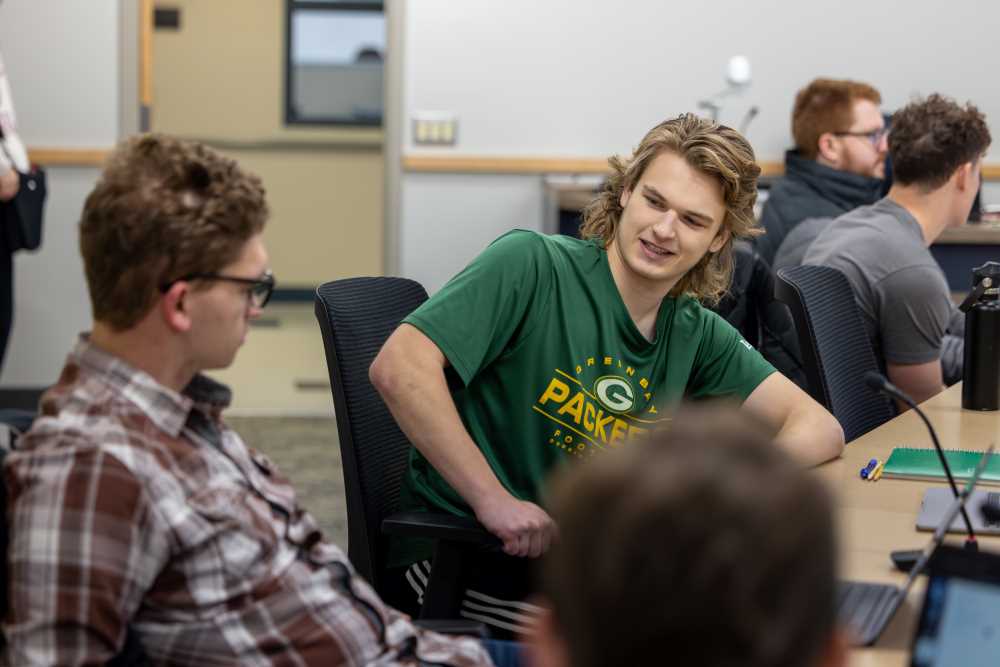
In addition to creating a supportive learning environment, Roberts integrates innovative tools that help students build confidence using the language.
One of those tools is Speakology AI, an online program that allows students to practice conversations with an AI tutor. Roberts programs the tutor with specific prompts and questions, allowing students to simulate real dialogue. The system also evaluates their responses and provides proficiency ratings so they can track improvement outside of class.
Students also meet weekly with conversation partners. Newer Russian learners are paired with more advanced students to encourage practice and mentorship. After each meeting, students reflect on the experience — considering what was challenging, what went well and what course materials they could review before the next conversation.
“It helps them organize their learning and truly prepare,” Roberts says. “And their feedback helps me see what we need to review.”
Roberts also uses a flipped classroom model. During asynchronous time, students complete activities such as vocabulary practice on Quizlet, where they hear recordings of Roberts pronouncing the words. “They listen to me beforehand,” she explains. “So they come to class already understanding how to pronounce the vocabulary.”
Students complete interactive exercises and written work online, often with instant feedback and unlimited opportunities to retry.
“With open resources and open-book homework, we spend class time communicating,” says Roberts. “Class time is for applying the language and going over misconceptions.”
That approach allows students to focus on conversation and real-world communication during class sessions.
Kenzie Scott, a fourth-year student from UW–Eau Claire, says those natural and unscripted conversations have been especially helpful.
“I’ve gotten lots of practice with my professor, classmates and AI conversation partners,” says Scott. “Natural conversations have helped and continue to help me learn to take concepts I’ve learned in one topic and transfer them to other topics. They also help surface things I’m struggling in and need to focus on.”
Baldner agrees, adding that the flipped classroom format helped accelerate her learning.
“Instead of just studying grammar and rules in class, we actually learn grammar on our own, and class time is purely for practicing conversation and answering questions,” Baldner says. “Being able to practice conversation from day one really sped up the language learning process.”
Scott also notices growth in herself beyond language learning.
“I’ve noticed that the more I learn Russian, the better I get at pattern recognition and problem-solving,” Scott says. “Taking this class has also helped with cultural understanding and self-discipline.”
A collaborative program
The Russian Studies program is also distinctive because of its multi-campus collaboration.
Students from UW–La Crosse attend class in person, while students from UW–Eau Claire, UW–Green Bay and UW–Stevens Point participate remotely through synchronous distance learning. All students enroll through their home campus while joining the same shared classroom.
The program is further strengthened by a Fulbright Foreign Language Teaching Assistant (FLTA) hosted at UW–Stevens Point. For more than a decade, the assistant has helped support instruction and cultural exchange across the program.
In addition to Roberts, the Fulbright scholar helps teach the language inside and outside of class and collaborates on developing new learning materials.
As a result, students regularly interact with two native speakers and gain exposure to cultures across the Russian-speaking world.
“In class, the instructor and FLTA model authentic conversations,” Roberts says. “That helps students develop strong listening and speaking skills.”
The multi-campus format also expands the student community.
“When you have a larger cohort across four campuses, it creates more opportunities to match students based on learning styles and interests,” Roberts says. “It really strengthens the language practice.”
And as new facilitators contribute teaching materials and resources, the program’s digital library of learning tools continues to grow — helping support the next generation of students taking on one of the world’s most challenging languages.
Written by UW-La Crosse University Marketing and Communications
Link to original story: https://www.uwlax.edu/news/posts/breaking-the-language-barrier/