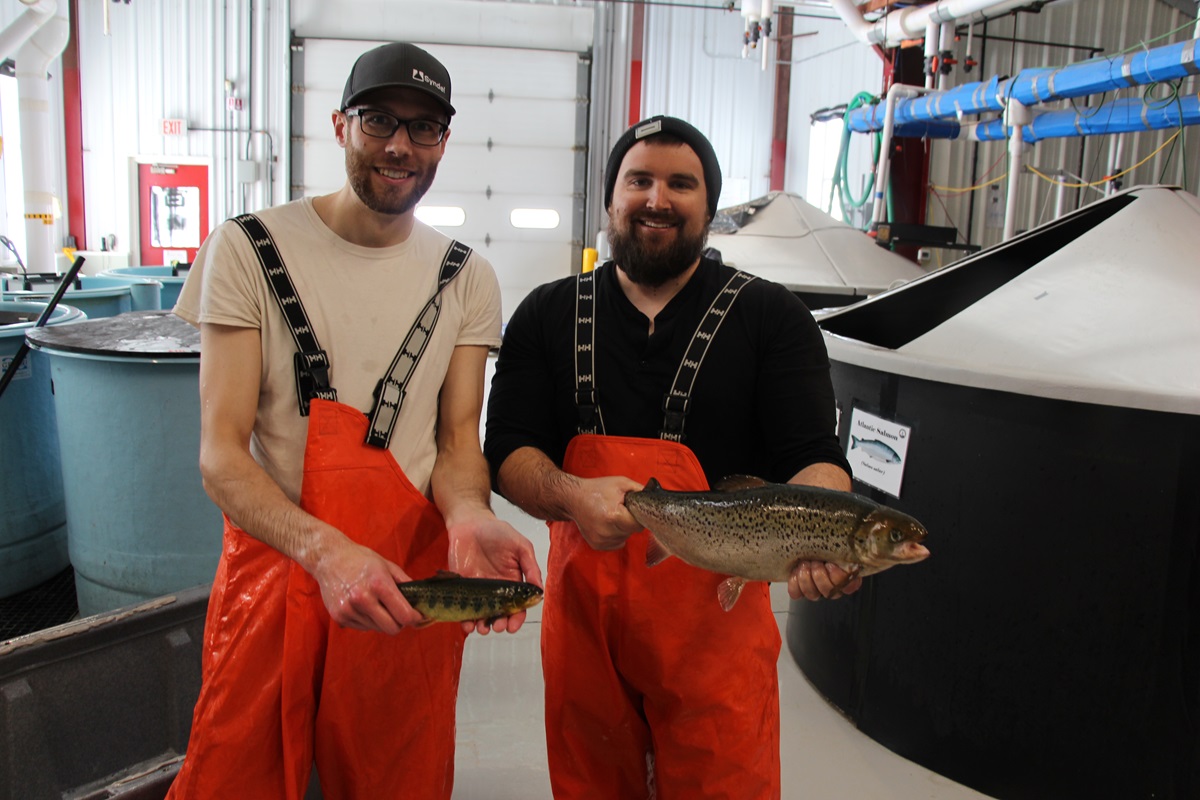
Seven days a week filtered water is flowing and feed is nurturing freshwater fish at the Northern Aquaculture Demonstration Facility (NADF) in Bayfield, Wis.
The UW-Stevens Point facility is one-of-a-kind in the Midwest and joins only a handful in the nation that offer similar capabilities in aquaculture research, demonstration and education. For example, NADF is now the leading source of university research into raising walleye in modern recirculating aquaculture systems and has pioneered research into many other aquaculture, fish physiology, and fisheries management topics. The original vision for an applied research facility has carried forward and served as a model for partners in aquaculture to follow for the past two decades.
Casting a Wide Net
The NADF marks 20 years this year, as a research leader and trusted industry resource. Greg Fischer, an aquaculture biologist, was its first employee and director, overseeing design and construction of the aquatic production barn, along with the outdoor ponds and raceways. He supervised operations at the facility, leaning into his experience as a fish hatchery program director with the Red Cliff Tribal Hatchery.
State partners, including the Wisconsin Aquaculture Association, wanted to be able to showcase the new recirculating systems widely used for farm-raised fish. The facility was formally opened in May 2006 with a UWSP partnership.
“Their research is relevant and being used every day by people out in the industry,” said Fischer.
Since his retirement from UWSP, Fischer now consults as a biologist on fish hatchery projects across the country. Whether he works with leaders in the Midwest or across the world, Fischer said, the NADF is held in high regard. The large-scale applied research continues to guide future aquaculture work, supporting other universities, conservation hatcheries, businesses, and fish farms of every scale.
“There are tendrils all over the industry spread from NADF,” said Fischer.
A Water Park Without the Slides
The NADF was built on a semi-commercial scale, complete with incubation systems, larval rearing rooms, tanks as large as 11,000 liters, and a testing and research laboratory, to help maintain the highest level of quality results in their aquaculture studies.
Current NADF Director Chris Hartleb said up to 98% of the water in the cold and warm water recirculation systems is recycled, instead of discharging it.

“The strong appeal is that you control everything in the system,” he said.
The first species produced within the facility was brook trout. Five years later, the NADF would begin to study Atlantic salmon. The culture of walleye is now backed by 10 years of research, with documented best practices. An in-depth Walleye Culture Guide, offered as a digital resource, includes precise formulated feeds, oxygen saturation, water temperatures, fish densities and dozens of other protocols for rearing and growing the fish to market size in an indoor recirculating system.
NADF has the top-tier infrastructure to manage multiple species at any given time. Lead technician Jared Neibauer started as a volunteer over a decade ago and has been involved in working with the life cycles of over 15 types of fish including baitfish, food fish, sport fish and conservation species. With “demonstration” in the name of the facility, he enjoys the interest from kids in school group tours who get hands-on with the fish.
Neibauer said the whole team, a full-time staff of six, works to support people interested in modeling their aquaculture systems, answering technical questions and collaborating with other research institutions. The cooperation NADF has fostered is integral to its long success.
“It’s a big industry but also feels small,” he said. We have groups asking all the time about things like pump efficiency and asking can you try it out?”
Neibauer collects data, cares for the fish, drains the ponds — whatever task the day calls for. It is all for the conservation of fish and the betterment of the aquaculture industry.
“It seems like there is more interest. Farmers are exploring farmed fish, from smaller scale up to the larger industry growth,” Neibauer said.
The wealth of knowledge NADF has shared about its aquaculture systems is possible thanks to continued state funding for the operating budget. In addition, Hartleb said, the tremendous presence they have in the community and K-12 schools across Wisconsin is only possible thanks to collaboration with the Wisconsin Sea Grant Program. Their continued support funds a half-time outreach specialist which UWSP matched to create a full-time position in 2014. Emma Hauser, regionally recognized for her extraordinary aquaculture work, has led the NADF outreach program for the past 12 years.
Pathway to Future Employment
As Hartleb reflects on 20 years of NADF accomplishments, he said none of it would have been sustained without their knowledgeable staff and those who have contributed their years of expertise. In the summer, undergraduate students often intern at the Bayfield facility and gain invaluable industry knowledge.
“They have the knowledge and fortitude to do masters’ level work,” Hartleb said.
The total Wisconsin fish hatcheries numbers around 2,000, with just over 80 commercial operations across the state ranging from backyard enthusiasts to large-scale operations like Superior Fresh in Hixton, Wis. The students hired to train at the NADF are often in demand with an industry in short supply of workers. Hartleb said he routinely fields phone calls each spring from employers in search of experienced technicians.

Job projections from Lightcast show biological technicians and fish farming supervisor positions will increase by 6% over the next decade. From managing hatcheries across the country in Alaska to state and federal positions in fish biology, aquaculture sales, research and teaching, former NADF employees have been immersed in the field.
Over the years, Hartleb said up to 90% of their previous interns and technicians from the NADF are offered opportunities in fisheries or aquaculture.
UWSP alum Jim Miazga ’16, fisheries and water resources, spent nearly two years with the NADF following graduation. He was part of a study to replicate the impacts of invasive species on Wisconsin’s walleye population. Their work began in the ponds on site until the fry were large enough to move into the facility tanks. He was responsible for daily care of the fish and data analysis.
Now a fisheries biologist leading habitat enhancement and managing sport fishing for the Kansas Department of Wildlife and Parks, Miazga said he grew an appreciation for the comprehensive work of hatcheries. The research tried to replicate what goes on in natural water bodies with wild fish.
“I was always interested in research and being a part of NADF was hugely valuable. They’re in for the right reasons, for research and to advance the industry,” he said.
The role equipped him with the skills he needed next as a research technician with the Wisconsin Cooperative Fisheries Unit.
One of the newest staff at the NADF is fisheries major Olivia Van Dyke. Before working at the facility, she had only cared for fish before in a home aquarium environment. The junior from Middleton, Wis. has trained over the course of her internship in the cultivation of four fish species, from eggs to fry and adult stages.
Handling salmon to sample their length and weight proved to be challenging. She shared the knowledge she has gained – siphoning tanks, changing filters, monitoring the fish – has given her confidence to pursue her goal of a career in aquaculture.
“I know aquaculture is a great way to feed people and prevent overfishing. It’s good for protecting the environment,” Van Dyke said. “It’s all going to be incredible on the resume. I know this internship is a golden ticket!”
Hartleb shared that watching what student workers like Van Dyke trained at the NADF have gone on to do with their careers is certainly among his proudest achievements of his long tenure.
State-of-the-Art from the Start
Consumers are increasingly showing interest in U.S. farm-raised fish and seafood with over 50% of the seafood consumed world-wide coming from aquaculture. Hatchery production of fish for conservation purposes is also growing. As a result, there is a substantial amount of need for research that supports these growing sectors. Both prospective and established aquaculture operations can turn to NADF to see practices in action, learn from ongoing research, and discover how to efficiently manage a pond, flow-through and recirculating aquaculture systems.
NADF works directly with private industry partners, state and tribal hatcheries and other universities to identify key issues and formulate projects that seek to ensure sustainable and effective production of fish and meet their goals for research, demonstration, education and stocking.
“Engaging in research that directly addresses the most pressing upcoming needs for the industry is always the goal,” said Tyler Firkus, NADF Research Program manager and assistant director.
Moving into the next 20 years, collaborations will be invaluable. The NADF, with its location in Red Cliff, is uniquely positioned to work on projects that address topics of interest to Red Cliff Treaty natural resources and the university. The facility’s expertise and resources also support collaborative efforts with organizations such as Wisconsin Sea Grant, the Great Lakes Fishery Commission, the U.S. Geological Survey (USGS), and the Wisconsin Department of Natural Resources (WDNR).
Learn more about the facility or schedule a tour at aquaculture.uwsp.edu.
Written by UW-Stevens Point
Link to original story: https://www.uwsp.edu/news/article/nadf-20th-anniversary/