Skip To Content
  • About Us
  • Our Impact
  • Policies
  • Faculty & Staff
Universities of Wisconsin Universities of Wisconsin

All In Wisconsin

All In Wisconsin

  • About Us
  • Our Impact
  • Policies
  • Faculty & Staff
  1. Universities of Wisconsin
  2. All In Wisconsin
  3. Campus Stories
  4. With milk testing and new tools, UW-Madison scientists are helping prevent bird flu outbreaks in Wisconsin and beyond
Campus Stories

With milk testing and new tools, UW-Madison scientists are helping prevent bird flu outbreaks in Wisconsin and beyond

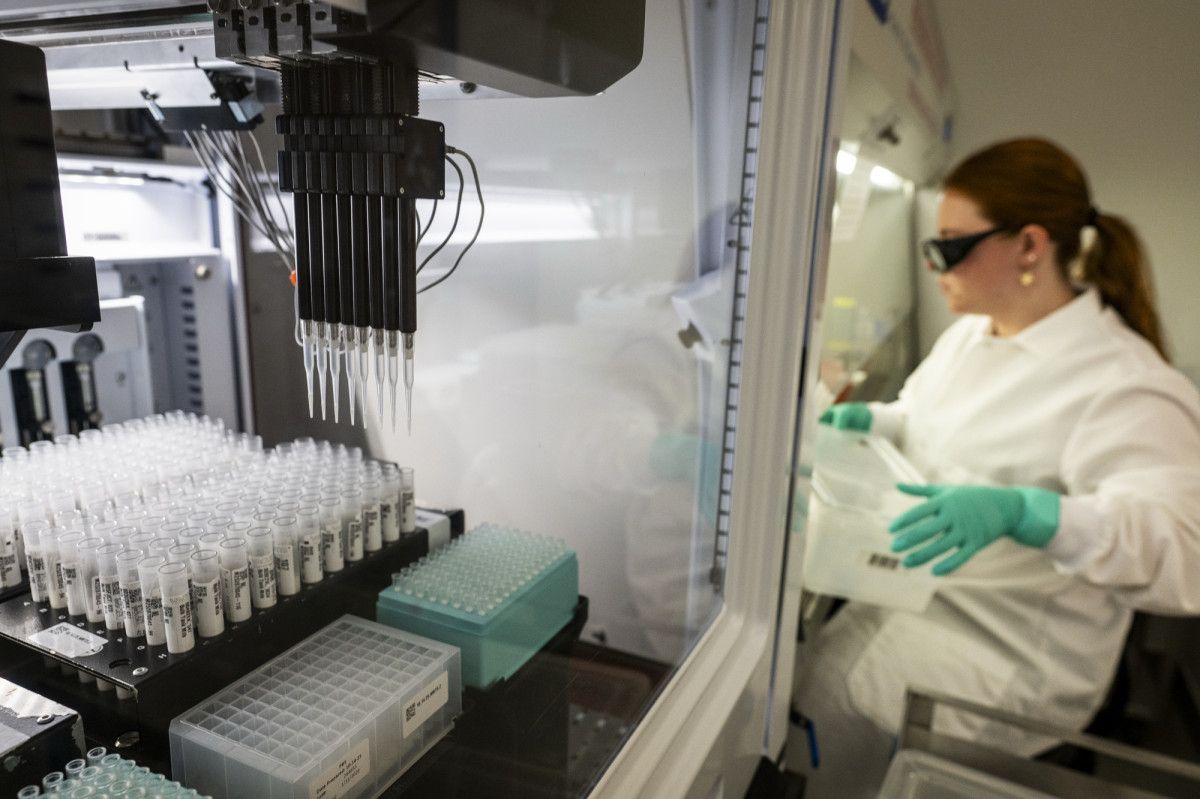
Photo: With the help of a robotic liquid handler, UW–Madison researchers at the Wisconsin Veterinary Diagnostic Laboratory (WVDL) are testing some 5,000 milk samples per month to monitor and prevent H5N1 bird flu outbreaks in the state’s dairy cattle. Photo: Taylor Wolfram / UW–Madison
With the help of a robotic liquid handler, UW–Madison researchers at the Wisconsin Veterinary Diagnostic Laboratory (WVDL) are testing some 5,000 milk samples per month to monitor and prevent H5N1 bird flu outbreaks in the state’s dairy cattle. Photo: Taylor Wolfram / UW–Madison

On a recent Thursday morning, Becky was hard at work at the University of Wisconsin–Madison’s Wisconsin Veterinary Diagnostic Laboratory (WVDL). A few test tubes at a time, hundreds of milk samples were carefully poured, measured and prepared for testing.

Becky doesn’t wear a typical lab coat or safety glasses. Why? Because Becky is a Biomek i5 — that is, a robot.

The automated but closely supervised liquid handler helps streamline and enhance laboratory workflows. And its efficiency is among the reasons that WVDL has emerged as a national leader in the response to H5N1 avian influenza on dairy farms.

Each month, WVDL tests at least one milk sample from every dairy farm in Wisconsin. WVDL’s scientists receive, process, prepare, test and log about 5,000 milk samples per month — all to help prevent an H5N1 outbreak among Wisconsin dairy cattle. The spread of H5N1 would have a potentially significant consequence: the more the virus circulates, the greater the chance new, more dangerous strains could emerge — strains capable of causing severe illness and death across multiple species, including humans. UW–Madison experts say the risk of this is currently low.

The sizable effort is part of the U.S. Department of Agriculture’s National Milk Testing Strategy, which launched in December 2024 after the bird flu was detected in dairy cattle in some states. The program’s goal is “to go from unknown prevalence to disease freedom across the country,” says Keith Poulsen, director of WVDL and a faculty member at the UW School of Veterinary Medicine (SVM).

A federal order bolstering the testing strategy mandates that herd owners with H5N1-positive cattle must submit data to support contact tracing and disease surveillance. It also requires dairy farms and entities handling milk for pasteurization to provide raw milk samples for testing. WVDL, which is designated a Level 1 National Animal Health Laboratory Network lab, plays a primary role in that testing.
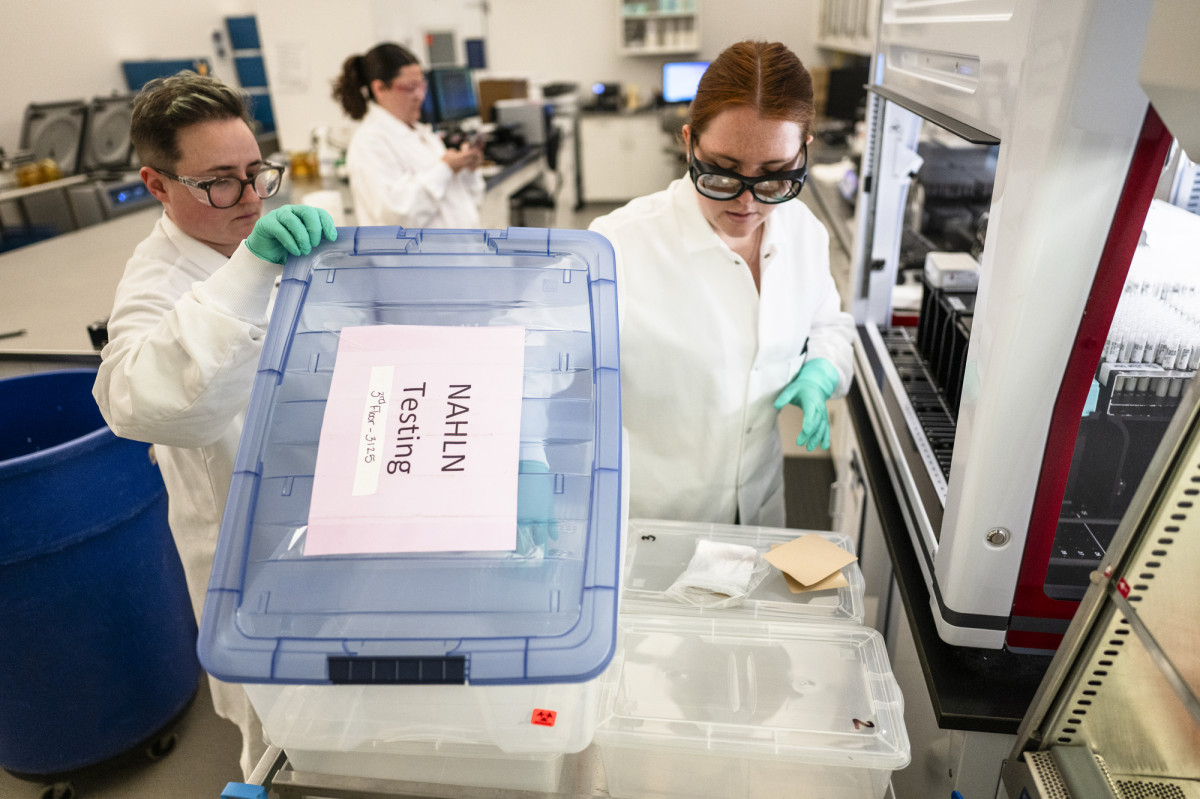
Technicians Asia Johnson and Maddie Myrick load samples into a transport box as they test milk samples.
Specimen receiving team lead Asia Johnson (left) and student technician Maddie Myrick load milk samples into a transport box. Each month, WVDL tests at least one milk sample from every dairy farm in Wisconsin. Photo: Taylor Wolfram / UW–Madison

The process is time- and labor-intensive. After Becky has prepared the milk samples — which takes 45 minutes to an hour for 96 samples — they are transported to the WVDL’s virology section for testing. Over the course of several hours, microbiologists prepare and perform two types of tests: a PCR test, which searches for active infections, and an ELISA antibody test, which looks for evidence of prior infection.

“Whether it’s on a single dairy farm or throughout an entire state, the most important part of managing any infectious disease — whether it’s COVID-19, brucellosis, foot-and-mouth disease, or H5N1 — is that you know where the virus is, and more importantly, where the virus is not,” says Poulsen, adding that surveillance allows for the preservation of public health resources.

“The milk testing strategy is working,” he adds. “Testing has already identified a new H5N1 strain in the Southwest and continues to catch emerging infections in other states.”

To date, avian flu has not been detected among Wisconsin dairy cattle.
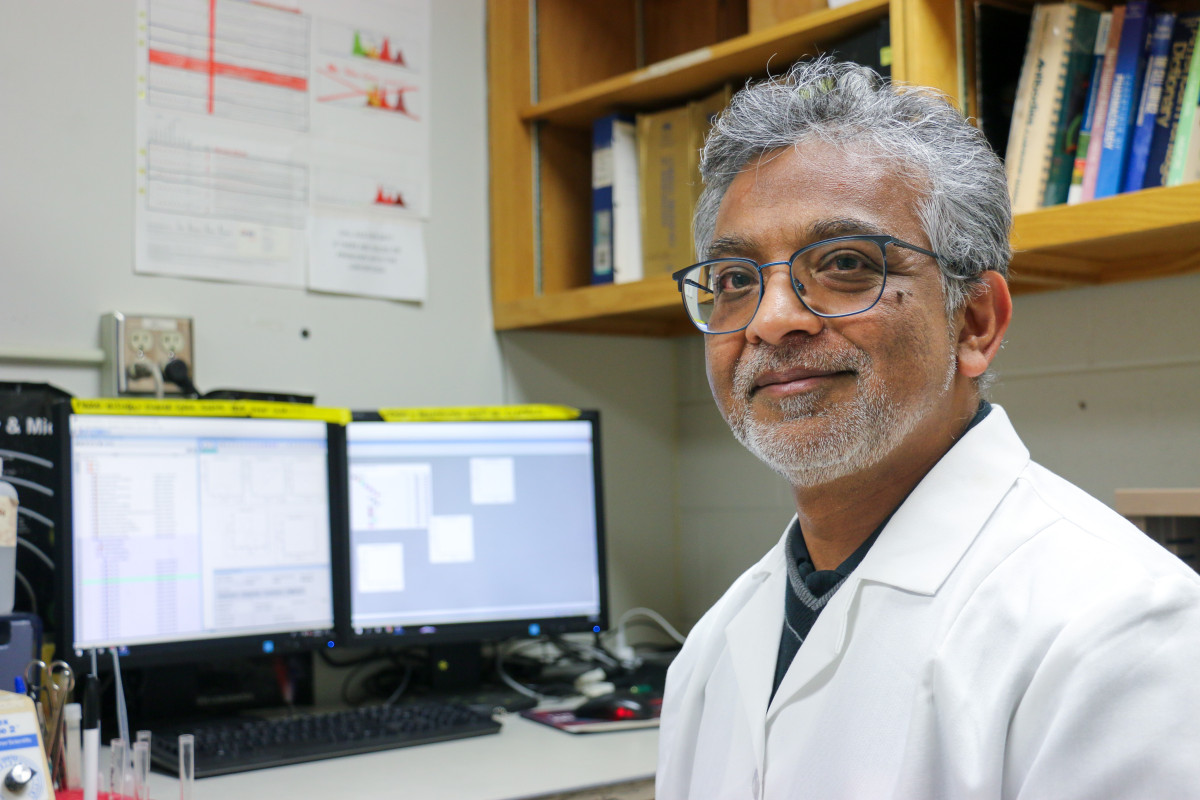
A portrait of professor Marulasiddappa Suresh, in front of his work station.
Marulasiddappa Suresh (above) and Yoshihiro Kawaoka, professors of pathobiological sciences, are working to develop a universal influenza vaccine to protect dairy cattle against H5N1. Photo: Seth Moffitt / School of Veterinary Medicine

Tools to fight the virus

Researchers at the SVM are on the front lines of understanding H5N1 and developing tools to fight the virus.

H5N1 appears to spread among dairy cows not through the upper respiratory tract, the usual route for flu viruses, but through the udders after cows encounter contaminated milking equipment.

That presents two challenges to Professors Marulasiddappa Suresh and Yoshihiro Kawaoka, in the school’s Department of Pathobiological Sciences, who are working to develop a universal influenza vaccine to protect cattle against H5N1. Not only do the animals need to be protected against respiratory transmission, but they also need safeguards against infection via their mammary glands — something that’s never been done before, Suresh says. This is especially important because the animals have considerably worse symptoms when they are infected via their udders.

The scientists are conducting immunogenicity studies, which test to see whether a vaccine candidate stimulates an immune response. Early results have been remarkably promising, says Suresh, who also serves as the school’s associate dean for research and graduate training.

The researchers have been able to elicit antibodies in both the blood and milk of cows that have received the vaccine. Antibodies help neutralize the virus before it can infect cells. They have also detected a T-cell response in the cows’ blood. T-cells target and kill infected cells.

The early success leaves Suresh optimistic that a vaccine that provides “two-pronged immunity” is possible.

“This was an unbelievably successful experiment,” Suresh says. The scientists are currently preparing their work for publication.
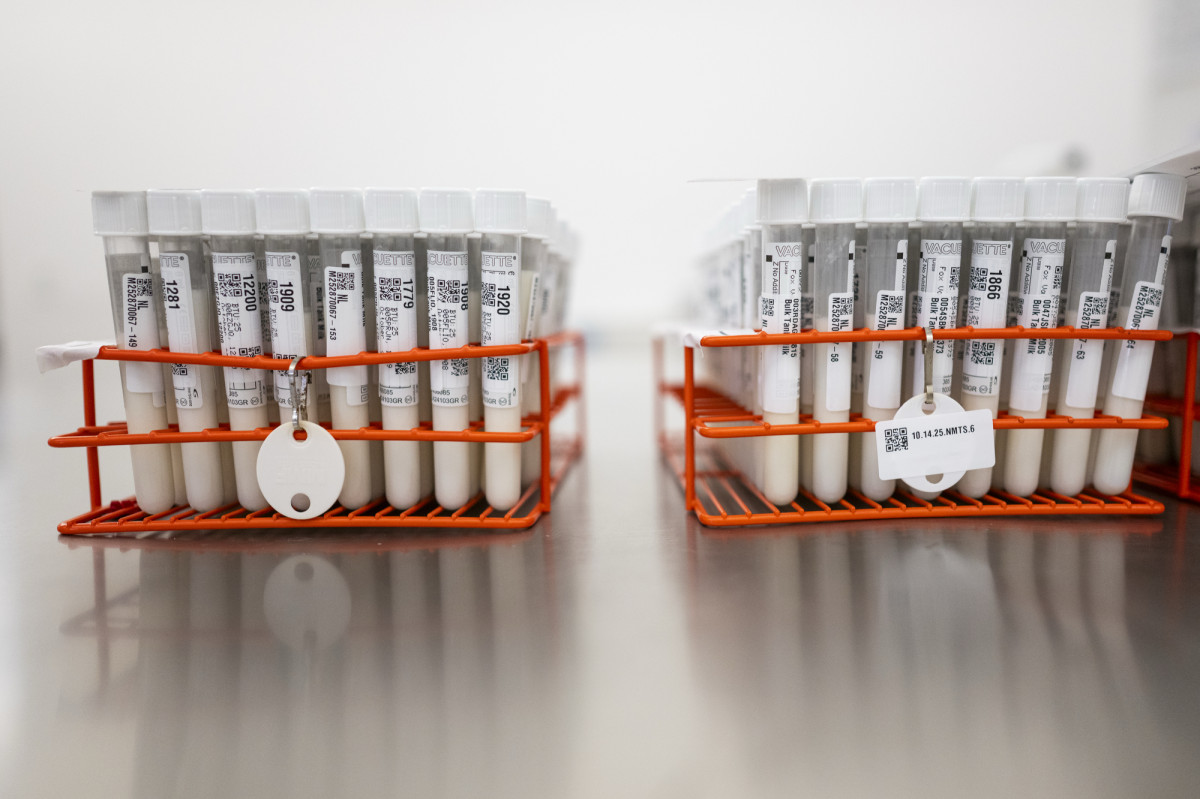
Dozens of milk samples in vials are grouped into two holders.
Although the risk is currently low, if H5N1 were to spread unmonitored in dairy cattle, more dangerous strains could emerge and affect other species. Photo: Taylor Wolfram / UW–Madison

Beyond the dairy industry

According to Poulsen, the National Milk Testing Strategy also has broader implications beyond the important work of keeping animals and humans healthy — it also protects the economy and national security.

Agriculture, including Wisconsin’s dairy industry, is an important source of trade between the United States and other countries, “and our trading partners want to know what’s happening with a globally reportable disease,” Poulsen says.

Trade, economic, and food supply security are all important facets of national security, he adds.

“The testing strategy is a powerful reminder of why taking a holistic view is vital to understanding the importance of public health work,” Poulsen says. “This isn’t just for dairy farmers. This is about keeping our economy strong and the country safe.”


Written by Jack Kelly

Link to original story: https://news.wisc.edu/with-milk-testing-and-new-tools-uw-scientists-are-helping-prevent-bird-flu-outbreaks-in-wisconsin-and-beyond/

Share this

Recents
Yearly
  • 2026
  • 2025
  • 2024
  • 2023
  • 2022
  • 2021
  • 2020
  • 2019
  • 2018
  • 2017
  • 2016
  • 2015
  • 2014
  • 2013
  • 2012
Monthly
  • February 2026
  • January 2026
  • December 2025
  • November 2025
  • October 2025
  • September 2025
  • August 2025
  • July 2025
  • June 2025
  • May 2025
  • April 2025
  • March 2025
  • February 2025
  • January 2025
  • December 2024
  • November 2024
  • October 2024
  • September 2024
  • August 2024
  • July 2024
  • June 2024
  • May 2024
  • April 2024
  • March 2024
  • February 2024
  • January 2024
  • December 2023
  • November 2023
  • October 2023
  • September 2023
  • August 2023
  • July 2023
  • June 2023
  • May 2023
  • April 2023
  • March 2023
  • February 2023
  • January 2023
  • December 2022
  • November 2022
  • October 2022
  • September 2022
  • August 2022
  • July 2022
  • June 2022
  • May 2022
  • April 2022
  • March 2022
  • February 2022
  • January 2022
  • December 2021
  • November 2021
  • October 2021
  • September 2021
  • August 2021
  • July 2021
  • June 2021
  • May 2021
  • April 2021
  • March 2021
  • February 2021
  • January 2021
  • December 2020
  • November 2020
  • October 2020
  • September 2020
  • August 2020
  • July 2020
  • June 2020
  • May 2020
  • April 2020
  • March 2020
  • February 2020
  • January 2020
  • December 2019
  • November 2019
  • October 2019
  • September 2019
  • August 2019
  • July 2019
  • June 2019
  • May 2019
  • April 2019
  • March 2019
  • February 2019
  • January 2019
  • December 2018
  • November 2018
  • October 2018
  • September 2018
  • August 2018
  • July 2018
  • June 2018
  • May 2018
  • April 2018
  • March 2018
  • February 2018
  • January 2018
  • December 2017
  • November 2017
  • October 2017
  • September 2017
  • August 2017
  • July 2017
  • June 2017
  • May 2017
  • April 2017
  • March 2017
  • February 2017
  • January 2017
  • December 2016
  • November 2016
  • October 2016
  • September 2016
  • August 2016
  • July 2016
  • June 2016
  • May 2016
  • April 2016
  • March 2016
  • February 2016
  • January 2016
  • December 2015
  • November 2015
  • October 2015
  • September 2015
  • August 2015
  • July 2015
  • June 2015
  • May 2015
  • April 2015
  • March 2015
  • February 2015
  • January 2015
  • December 2014
  • November 2014
  • October 2014
  • September 2014
  • July 2014
  • June 2014
  • May 2014
  • April 2014
  • March 2014
  • January 2014
  • December 2013
  • November 2013
  • October 2013
  • September 2013
  • August 2013
  • July 2013
  • June 2013
  • May 2013
  • April 2013
  • March 2013
  • February 2013
  • January 2013
  • December 2012
  • November 2012
  • October 2012
Universities
  • Freshwater Collaborative of Wisconsin
  • Universities of Wisconsin
  • UW Colleges
  • UW Extended Campus
  • UW-Eau Claire
  • UW-Extension
  • UW-Green Bay
  • UW-La Crosse
  • UW-Madison
  • UW-Milwaukee
  • UW-Oshkosh
  • UW-Parkside
  • UW-Platteville
  • UW-Platteville; UW-La Crosse
  • UW-River Falls
  • UW-Stevens Point
  • UW-Stout
  • UW-Superior
  • UW-Whitewater
Categories
  • Community
  • Economy
  • Research & Innovation

Share your story

Are you or someone you know contributing to inspiring work at our public university campuses throughout Wisconsin?

Related Articles

  • Photo of Badger dad Charlie Alamodin holding the hands of his daughter, undergraduate Kayla Rose Alamodin during Badger Fest. Photo: Althea Dotzour / UW–Madison

    UW research scientist and meditation teacher Cortland Dahl explains what’s so great about gratitude, no matter the time of year. After the season of Black Fridays, Cyber Mondays, and a constant bombardment of sentimental commercials pulling at our heart and purse strings, there’s one more gift to consider—gratitude.  The price is right. No need for a receipt. And even…

    February 16, 2026

    The gift of gratitude

  • Photo of UW-Superior Yellowjacket students

    The University of Wisconsin-Superior has added a Bachelor of Science degree in sport and recreation management to its list of programs. Residing within the Health and Human Performance Department, this degree is designed to prepare students for leadership roles in the rapidly growing sport, fitness, recreation and event management industries. Available both on campus and fully online, the…

    February 12, 2026

    UW-Superior adds bachelor’s degree in sport and recreation management

  • Photo of AI workshop at UW-Oshkosh

    From classrooms and research labs to student support services and administrative workflows, artificial intelligence took center stage during the 2026 UW-Oshkosh Campus AI Workshop, a full-day event on Jan. 27 designed to help faculty and staff better understand how AI tools can be used responsibly and effectively across the university. Hosted in Sage Hall, the…

    February 11, 2026

    More than 200 UW-Oshkosh faculty, staff join workshop exploring how AI can strengthen teaching, research, student success 

Universities of Wisconsin
Office of Public Affairs, Communications, and Branding
Madison, WI 53706

universityrelations@wisconsin.edu

  • About Us
  • All In Wisconsin
  • Our Campuses
  • Board of Regents
  • Office of the President
  • Offices
  • News
  • Contact Us
  • All Sites
  • Employee Intranet

© 2026 Board of Regents - University of Wisconsin System. All Rights Reserved

  • Accessibility Statement
  • Privacy Policy