University of Wisconsin Logo
University of Wisconsin Mark

All In Wisconsin

  • Our Impact
  • About Us
  • Faculty & Staff
  • News
Search Icon
Universities of Wisconsin Constellation
Browse all sites
  1. Universities of Wisconsin
  2. All In Wisconsin
  3. Campus Stories
  4. UW-Milwaukee professor uses sport psychology research to solve real-world problems

UW-Milwaukee professor uses sport psychology research to solve real-world problems

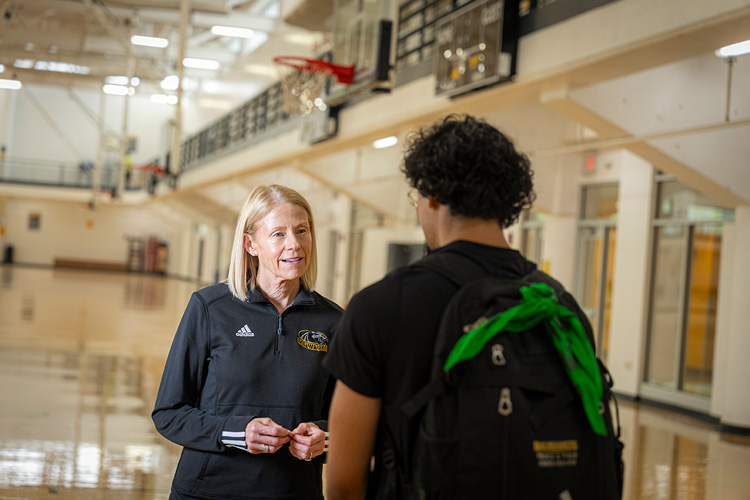
Photo: Barbara Meyer is internationally recognized for her expertise in performance psychology. In addition to her role as director of UWM's Sport and Performance Psychology Laboratory, she's provided services to world-class athletes, professional organizations and college teams in a dozen different sports. (UWM Photo/Andy Manis)
Barbara Meyer is internationally recognized for her expertise in performance psychology. In addition to her role as director of UWM’s Sport and Performance Psychology Laboratory, she’s provided services to world-class athletes, professional organizations and college teams in a dozen different sports. (UWM Photo/Andy Manis)

Barbara Meyer can’t help herself. Whether she’s working with Olympic athletes, advising a college soccer team or standing in line at the grocery store, she’s always analyzing performance.

“I’ll be in the checkout line and say to my husband, if the cashier and the bagger set up a system and were planning and communicating together, they could be so much more effective,” said Meyer, a professor of sport and performance psychology at the University of Wisconsin-Milwaukee. “And my husband’s like, ‘Barbara, don’t bother them.’ But I see performance in everything.”

For Meyer, it’s not about perfection; it’s about potential and improvement. And honing every aspect — physical, mental and emotional — to help people perform.

“I’m just fascinated with performance,” she said. “How people become the best and stay the best.”

That fascination has taken her from university campuses to professional locker rooms and Olympic ski slopes. It’s enabled her to apply her approach not only to athletics but to anything that requires focus, resilience and excellence. As director of UWM’s Sport and Performance Psychology Laboratory, Meyer and her students advance new research to tackle real-world problems related to performance.

“There is nothing more energizing for me than getting in the trenches,” Meyer said. “I have the best job in the world.”

A passion for teaching and a talent for training

Raised in Beaver Dam, Wisconsin, Meyer played tennis at UW-Eau Claire and planned to become a dentist. But a well-timed article her mother sent about the emerging field of sport psychology sparked her curiosity. Eventually, that interest led her to Michigan State, where she earned a master’s and a PhD in health education, counseling psychology and human performance.

In grad school, after she spent weeks preparing a single 50-minute statistics lecture, Meyer also discovered a passion for teaching.

“Once I got up there, I never wanted to sit down,” she said. “I loved the challenge of trying to make the complicated simple. If I could connect with students, reduce their anxiety and increase their confidence, I could help them perform better.”

Following her graduation in 1991, Meyer came to UWM as a visiting professor, and several years later a tenure track position opened up. “This has been my one and only real job ever since,” she says.

Meyer’s off-campus clients might disagree. Over the years, Meyer has provided services to world-class athletes, professional organizations and college teams in a dozen different sports, helping them gain a competitive edge and achieve success.

She’s also worked every Winter Olympics since 2002, when an Australian aerial skier who won a gold medal called Meyer her “secret weapon.” Meyer consults with athletes on returning from injury, concentrating under pressure, overcoming fear of failure and performing at their best.

“The most humbling thing is that people invite you on their journey,” she said. “Whether it’s a first-generation student pursuing their degree or an athlete chasing a lifelong dream, they’re trusting you to help.”

Meyer’s Olympic streak continues next month, when she’ll be working with the Australian team at the 2026 Winter Games in Italy.

Real problems, real solutions

At UWM, Meyer’s work extends beyond athletes to include tactical and corporate populations — police officers, military members, business leaders — who also operate in high-performance environments.

For example, Meyer and co-instructor Kyle Ebersole, a performance and sport physiologist, recently collaborated with the Milwaukee Fire Department to better understand the retirement transition of firefighters — many of whom face challenges related not only to career change, but shifts in identity and social support.

“There was nothing out there on the topic,” she said. “So, we used the sport research of professional athletes transitioning to retirement as our foundation and collected data on firefighters to see what their experiences were like.”

Another time, a college hockey player was looking for tips to mentally prepare to compete against his brother. Again, there was no existing body of work on the subject, so Meyer’s team created it, and the project resulted in three published studies. Through her integration of teaching, research and service, Meyer has helped position UWM as a leader in performance psychology.

“We aren’t in an ivory tower,” she said. “We’re out engaging in the community and doing the work, and I think that’s what makes our program unique.”


Written by James Carlton

Link to original story: https://uwm.edu/news/uwm-professor-uses-sport-psychology-research-to-solve-real-world-problems/

Recents
  • UW-Milwaukee professor uses sport psychology research to solve real-world problems

    Tuesday, January 27, 2026

  • Community Capital: How Credit Unions and Universities Partner to Strengthen Wisconsin

    Monday, January 26, 2026

  • UW-Whitewater honored nationally for deep-rooted community impact

    Friday, January 23, 2026

Recents
Yearly
  • 2026
  • 2025
  • 2024
  • 2023
  • 2022
  • 2021
  • 2020
  • 2019
  • 2018
  • 2017
  • 2016
  • 2015
  • 2014
  • 2013
  • 2012
Monthly
  • January 2026
  • December 2025
  • November 2025
  • October 2025
  • September 2025
  • August 2025
  • July 2025
  • June 2025
  • May 2025
  • April 2025
  • March 2025
  • February 2025
  • January 2025
  • December 2024
  • November 2024
  • October 2024
  • September 2024
  • August 2024
  • July 2024
  • June 2024
  • May 2024
  • April 2024
  • March 2024
  • February 2024
  • January 2024
  • December 2023
  • November 2023
  • October 2023
  • September 2023
  • August 2023
  • July 2023
  • June 2023
  • May 2023
  • April 2023
  • March 2023
  • February 2023
  • January 2023
  • December 2022
  • November 2022
  • October 2022
  • September 2022
  • August 2022
  • July 2022
  • June 2022
  • May 2022
  • April 2022
  • March 2022
  • February 2022
  • January 2022
  • December 2021
  • November 2021
  • October 2021
  • September 2021
  • August 2021
  • July 2021
  • June 2021
  • May 2021
  • April 2021
  • March 2021
  • February 2021
  • January 2021
  • December 2020
  • November 2020
  • October 2020
  • September 2020
  • August 2020
  • July 2020
  • June 2020
  • May 2020
  • April 2020
  • March 2020
  • February 2020
  • January 2020
  • December 2019
  • November 2019
  • October 2019
  • September 2019
  • August 2019
  • July 2019
  • June 2019
  • May 2019
  • April 2019
  • March 2019
  • February 2019
  • January 2019
  • December 2018
  • November 2018
  • October 2018
  • September 2018
  • August 2018
  • July 2018
  • June 2018
  • May 2018
  • April 2018
  • March 2018
  • February 2018
  • January 2018
  • December 2017
  • November 2017
  • October 2017
  • September 2017
  • August 2017
  • July 2017
  • June 2017
  • May 2017
  • April 2017
  • March 2017
  • February 2017
  • January 2017
  • December 2016
  • November 2016
  • October 2016
  • September 2016
  • August 2016
  • July 2016
  • June 2016
  • May 2016
  • April 2016
  • March 2016
  • February 2016
  • January 2016
  • December 2015
  • November 2015
  • October 2015
  • September 2015
  • August 2015
  • July 2015
  • June 2015
  • May 2015
  • April 2015
  • March 2015
  • February 2015
  • January 2015
  • December 2014
  • November 2014
  • October 2014
  • September 2014
  • July 2014
  • June 2014
  • May 2014
  • April 2014
  • March 2014
  • January 2014
  • December 2013
  • November 2013
  • October 2013
  • September 2013
  • August 2013
  • July 2013
  • June 2013
  • May 2013
  • April 2013
  • March 2013
  • February 2013
  • January 2013
  • December 2012
  • November 2012
  • October 2012
Universities
  • Freshwater Collaborative of Wisconsin
  • Universities of Wisconsin
  • UW Colleges
  • UW Extended Campus
  • UW-Eau Claire
  • UW-Extension
  • UW-Green Bay
  • UW-La Crosse
  • UW-Madison
  • UW-Milwaukee
  • UW-Oshkosh
  • UW-Parkside
  • UW-Platteville
  • UW-Platteville; UW-La Crosse
  • UW-River Falls
  • UW-Stevens Point
  • UW-Stout
  • UW-Superior
  • UW-Whitewater
Categories
  • Community
  • Economic Development
  • Research & Innovation
Universities of Wisconsin
Facebook Icon X Icon LinkedIn Icon Instagram Icon YouTube Icon
Office of Public Affairs, Communications, and Branding
Madison, WI 53706

universityrelations@wisconsin.edu

Employee Intranet

© 2026 Board of Regents - University of Wisconsin System. All Rights Reserved

All Sites | Accessibility | Privacy | Contact Webmaster