Skip To Content
  • About Us
  • Our Impact
  • Policies
  • Faculty & Staff
Universities of Wisconsin Universities of Wisconsin

All In Wisconsin

All In Wisconsin

  • About Us
  • Our Impact
  • Policies
  • Faculty & Staff
  1. Universities of Wisconsin
  2. All In Wisconsin
  3. Campus Stories
  4. Healthcare data meets AI in UW-Eau Claire honors course
Campus Stories

Healthcare data meets AI in UW-Eau Claire honors course

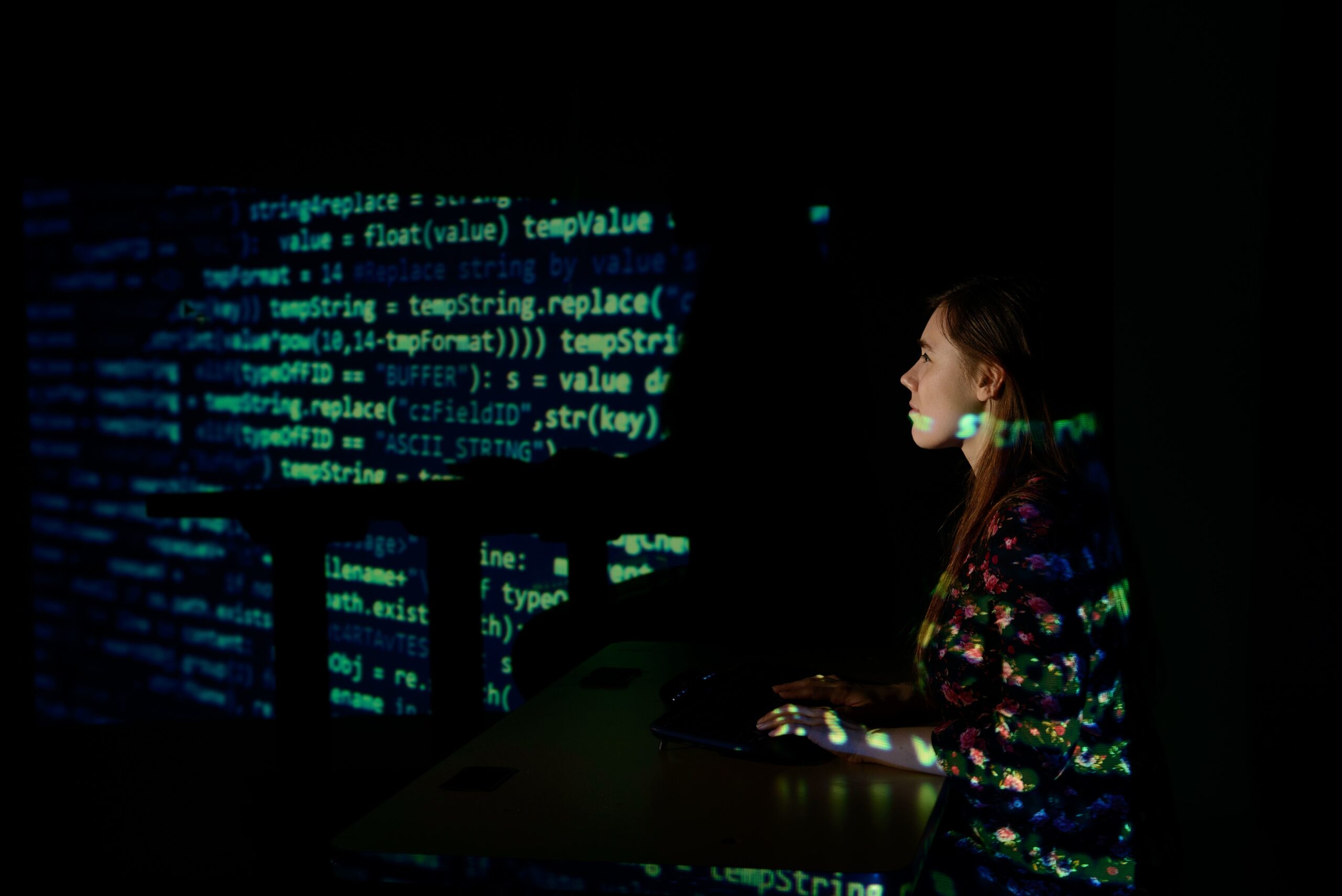
Photo of UW-Eau Claire researcher looking at screen

When UW-Eau Claire senior Michael Collins saw a new interdisciplinary course offered in the Mark Stephen Cosby Honors College, he was excited to enroll.

Among the classes for fall 2025 was the second iteration of Honors 118: Chemical Computing and AI in Healthcare, taught by Dr. Sudeep Bhattacharyay, professor of chemistry and biochemistry.

“Artificial intelligence is very relevant to my major and my career goals, so I thought it would be in my wheelhouse,” says the actuarial science major from Jackson.

“I’d had some exposure to AI models during an internship, and big data sets are what my future is going to be about. I plan to work in the insurance industry, more property and casualty over the health insurance lane, but AI modeling is relevant for sure,” Collins says.

Collins says he appreciates the way courses in the Cosby Honors College deliver high-level complex topics like AI and machine learning in a way that invites students across many majors to take an interest.

“It’s important that all students gain some understanding of AI,” Collins says. “It will be a part of so many job sectors — we should all have at least a starting point of understanding how it works and get past the general mystery about it.”

Delivering on the promise of an honors degree
headshot

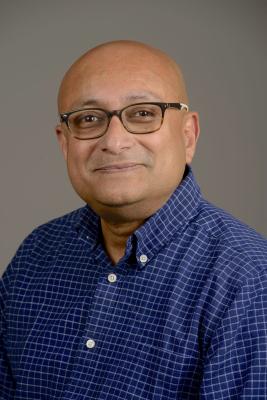
Dr. Sudeep Bhattacharyay, professor of chemistry and biochemistry at UW-Eau Claire

Bhattacharyay worked with Dr. Heather Fielding, director of the Cosby Honors College, to develop a course on AI designed for science and nonscience majors.

Modern medicine has become highly reliant upon data, and Bhattacharyay says that AI is increasingly used to provide critical analysis and solutions in areas like genetics, disease tracking and treatment prediction modeling.

“The advent of ‘Big Data’ has created significant opportunity to use machines to learn from this data to better predict treatments and, in turn, deliver improved patient outcomes,” he says.

“We all have a stake in in the future of AI, and healthcare is part of all of our lives,” Bhattacharyay says about the appeal of this course, which counts as a general science liberal education credit for non-STEM majors in the Cosby Honors College.
Heather Fielding

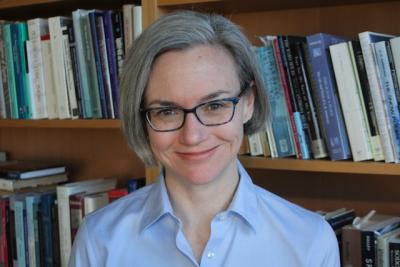
Dr. Heather Fielding, director of the Mark Stephen Cosby Honors College at UW-Eau Claire

Fielding says the course has filled to the maximum 26 students both times it has run so far, and it is a chance for honors students at all levels to learn about the chemistry behind the science, and the use of the Bluglold Supercomputing Cluster in analyzing the data.

“Sudeep has managed to make this complex topic accessible to a wide range of students,” Fielding says.

“Our courses all are rooted in a discussion-based pedagogy, so many non-STEM students who might never otherwise take a course from someone like Sudeep are learning this timely topic in a scientific way from one of our leading computational chemistry instructors — it’s a very rich experience.”

Student takeaways for AI in their futures

For some students, Bhattacharyay’s dive into AI and healthcare data in Honors 118 builds on previous experience using or general knowledge of AI modeling. This was true for Collins, who says he registered for the class “knowing maybe more about AI than the average student.”
Michael_Collins

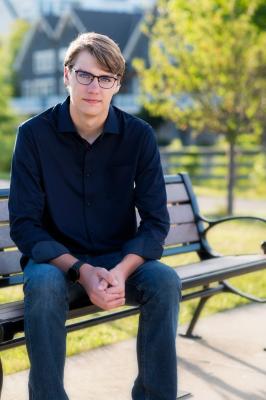
Michael Collins, senior actuarial science major from Jackson

“In my summer internship with an insurance firm last year, there was a guy working on a special project merging AI into some of their systems,” Collins says.

Collins was able to talk to him about the work quite a bit, observing how machine learning works with big data in insurance, and better understanding how it works in general. He believes that more students need that baseline understanding of AI as they move into many careers in the world today.

“A lot of students think of AI as just a better search engine than Google,” he says. “It can work like that, but it’s more important to understand how it learns, how it is pulling and using data, and why it’s wrong sometimes in making predictions.”

Along with introducing basic functions of machine learning, the class was also designed as a springboard to important discussions about the ethical concerns around artificial intelligence, an aspect of the course Collins says he appreciated.

“One of the later assignments asked us all to read a paper on CRISPR [an advanced gene-editing technology] and get an idea of what recent technological innovations might mean for the future of possibilities within that field. We were each to pose two questions about hypothetical outcomes,” Collins says.

Collins says his group came up with wide-ranging discussions around topics of potential impact from such an AI use case. They touched on government oversight, equality, self-identity, ableism and simply “what it means to be human.”

Bhattacharyay and Fielding both say they were impressed with the critical thinking at work in class sessions like the one Collins describes. It leads, they say, to the exact type of thoughtful considerations needed as AI plays more of a role in higher education and beyond.

“We are optimistic about the good that AI can do,” Bhattacharyay says. “We are also cautious about potential negatives, so we look for ways to maintain ability to steer the course.”

“Given the data-driven nature of our healthcare system and the foundational chemical science behind it, this course emphasizes the need to uphold ethical standards and critically analyze potential biases in health-related predictions,” Bhattacharyay says.

_______________________________________________________________________________

Learn more about the Mark Stephen Cosby Honors College.

If you have questions about Honors 118: Chemical Computing and AI in Healthcare, contact Dr. Sudeep Bhattacharyay.


Written by UW-Eau Claire

Link to original story: https://www.uwec.edu/stories/healthcare-data-meets-ai-uw-eau-claire-honors-course

Share this

Recents
Yearly
  • 2026
  • 2025
  • 2024
  • 2023
  • 2022
  • 2021
  • 2020
  • 2019
  • 2018
  • 2017
  • 2016
  • 2015
  • 2014
  • 2013
  • 2012
Monthly
  • February 2026
  • January 2026
  • December 2025
  • November 2025
  • October 2025
  • September 2025
  • August 2025
  • July 2025
  • June 2025
  • May 2025
  • April 2025
  • March 2025
  • February 2025
  • January 2025
  • December 2024
  • November 2024
  • October 2024
  • September 2024
  • August 2024
  • July 2024
  • June 2024
  • May 2024
  • April 2024
  • March 2024
  • February 2024
  • January 2024
  • December 2023
  • November 2023
  • October 2023
  • September 2023
  • August 2023
  • July 2023
  • June 2023
  • May 2023
  • April 2023
  • March 2023
  • February 2023
  • January 2023
  • December 2022
  • November 2022
  • October 2022
  • September 2022
  • August 2022
  • July 2022
  • June 2022
  • May 2022
  • April 2022
  • March 2022
  • February 2022
  • January 2022
  • December 2021
  • November 2021
  • October 2021
  • September 2021
  • August 2021
  • July 2021
  • June 2021
  • May 2021
  • April 2021
  • March 2021
  • February 2021
  • January 2021
  • December 2020
  • November 2020
  • October 2020
  • September 2020
  • August 2020
  • July 2020
  • June 2020
  • May 2020
  • April 2020
  • March 2020
  • February 2020
  • January 2020
  • December 2019
  • November 2019
  • October 2019
  • September 2019
  • August 2019
  • July 2019
  • June 2019
  • May 2019
  • April 2019
  • March 2019
  • February 2019
  • January 2019
  • December 2018
  • November 2018
  • October 2018
  • September 2018
  • August 2018
  • July 2018
  • June 2018
  • May 2018
  • April 2018
  • March 2018
  • February 2018
  • January 2018
  • December 2017
  • November 2017
  • October 2017
  • September 2017
  • August 2017
  • July 2017
  • June 2017
  • May 2017
  • April 2017
  • March 2017
  • February 2017
  • January 2017
  • December 2016
  • November 2016
  • October 2016
  • September 2016
  • August 2016
  • July 2016
  • June 2016
  • May 2016
  • April 2016
  • March 2016
  • February 2016
  • January 2016
  • December 2015
  • November 2015
  • October 2015
  • September 2015
  • August 2015
  • July 2015
  • June 2015
  • May 2015
  • April 2015
  • March 2015
  • February 2015
  • January 2015
  • December 2014
  • November 2014
  • October 2014
  • September 2014
  • July 2014
  • June 2014
  • May 2014
  • April 2014
  • March 2014
  • January 2014
  • December 2013
  • November 2013
  • October 2013
  • September 2013
  • August 2013
  • July 2013
  • June 2013
  • May 2013
  • April 2013
  • March 2013
  • February 2013
  • January 2013
  • December 2012
  • November 2012
  • October 2012
Universities
  • Freshwater Collaborative of Wisconsin
  • Universities of Wisconsin
  • UW Colleges
  • UW Extended Campus
  • UW-Eau Claire
  • UW-Extension
  • UW-Green Bay
  • UW-La Crosse
  • UW-Madison
  • UW-Milwaukee
  • UW-Oshkosh
  • UW-Parkside
  • UW-Platteville
  • UW-Platteville; UW-La Crosse
  • UW-River Falls
  • UW-Stevens Point
  • UW-Stout
  • UW-Superior
  • UW-Whitewater
Categories
  • Community
  • Economy
  • Research & Innovation

Share your story

Are you or someone you know contributing to inspiring work at our public university campuses throughout Wisconsin?

Related Articles

  • Photo of Hoan Bridge in downtown Milwaukee, Wisconsin

    A unique research collaboration is providing students at all levels with interdisciplinary hands-on training in a critical field: analyzing how emerging contaminants affect a major urban waterway. Inna Popova, an assistant professor of soil chemistry, environmental toxicology and contaminants at UW-Madison, and Laodong Guo, professor of aquatic biogeochemistry at UW-Milwaukee, are studying the pollution history…

    February 19, 2026

    Tracking Emerging Contaminants in the Greater Milwaukee Estuary

  • Photo of the Easy Zip design, which is intended for individuals who may struggle to free fabric caught in a zipper due to limited hand mobility.

    A University of Wisconsin-Platteville student earned first place in the WiSys Innovation On-Ramp program after presenting an assistive zipper device designed to help people with limited hand mobility. The Eazy Zip is an attachable cube that fits onto a zipper pull. Its cover wraps around the zipper tab and gently pushes surrounding fabric away from…

    February 18, 2026

    UW-Platteville student wins first place for assistive zipper device

  • Photo of UW-Whitewater birdfeeders visible on bird cam

    Motivated by a passion for learning about the surrounding environment and a love of birds, the University of Wisconsin-Whitewater Department of Biology built a tool with the potential to captivate audiences and support valuable hands-on learning opportunities for students. In May of 2025, the department launched a “nature cam” livestream on YouTube. Inspired by the bird cams…

    February 17, 2026

    UW-Whitewater biology bird cam delivers entertainment, learning opportunities

Universities of Wisconsin
Office of Public Affairs, Communications, and Branding
Madison, WI 53706

universityrelations@wisconsin.edu

  • About Us
  • All In Wisconsin
  • Our Campuses
  • Board of Regents
  • Office of the President
  • Offices
  • News
  • Contact Us
  • All Sites
  • Employee Intranet

© 2026 Board of Regents - University of Wisconsin System. All Rights Reserved

  • Accessibility Statement
  • Privacy Policy