Friday, April 22 & Friday, April 29, 2022
ZOOM
We are living in challenging times with several external forces pressuring us to change and comply, sometimes in ways that contradict our core values as educators. Higher education, including here in Wisconsin, continues to be disrupted with distractions that attempt to shift us away from our purpose of teaching and learning. Speaking of distractions in the context of racism, Toni Morrison in 1975 said: “It keeps you from doing your work. It keeps you explaining over and over again, your reason for being… None of that is necessary. There will always be one more thing.” Our teaching and learning context may be different, but Morrison’s explanation of distractions strikes a chord.
Building on Mariame Kaba’s (2024) idea that “hope is a discipline,” we embrace “active hope” as a practice that does not require our optimism but rather challenges us to focus on our intentions. How are you reclaiming hope in this current moment of change? What new teaching approaches are you trying, and how do you know they are working? In what ways are you sustaining yourself and nurturing relationships? How can we co-create spaces for moments of grief and hope that foster resilience?
We invite you to join our systemwide conversation about The Joys of Teaching & Learning: Reclaiming Hope by presenting at OPID’s 2026 Spring Conference. Please share your experiences, ideas, insights, questions, failures, and accomplishments so we can collaborate and learn together to explore possibilities for strengthening our teaching and learning for all students – even in times of uncertainty and change, especially in times of uncertainty and change.
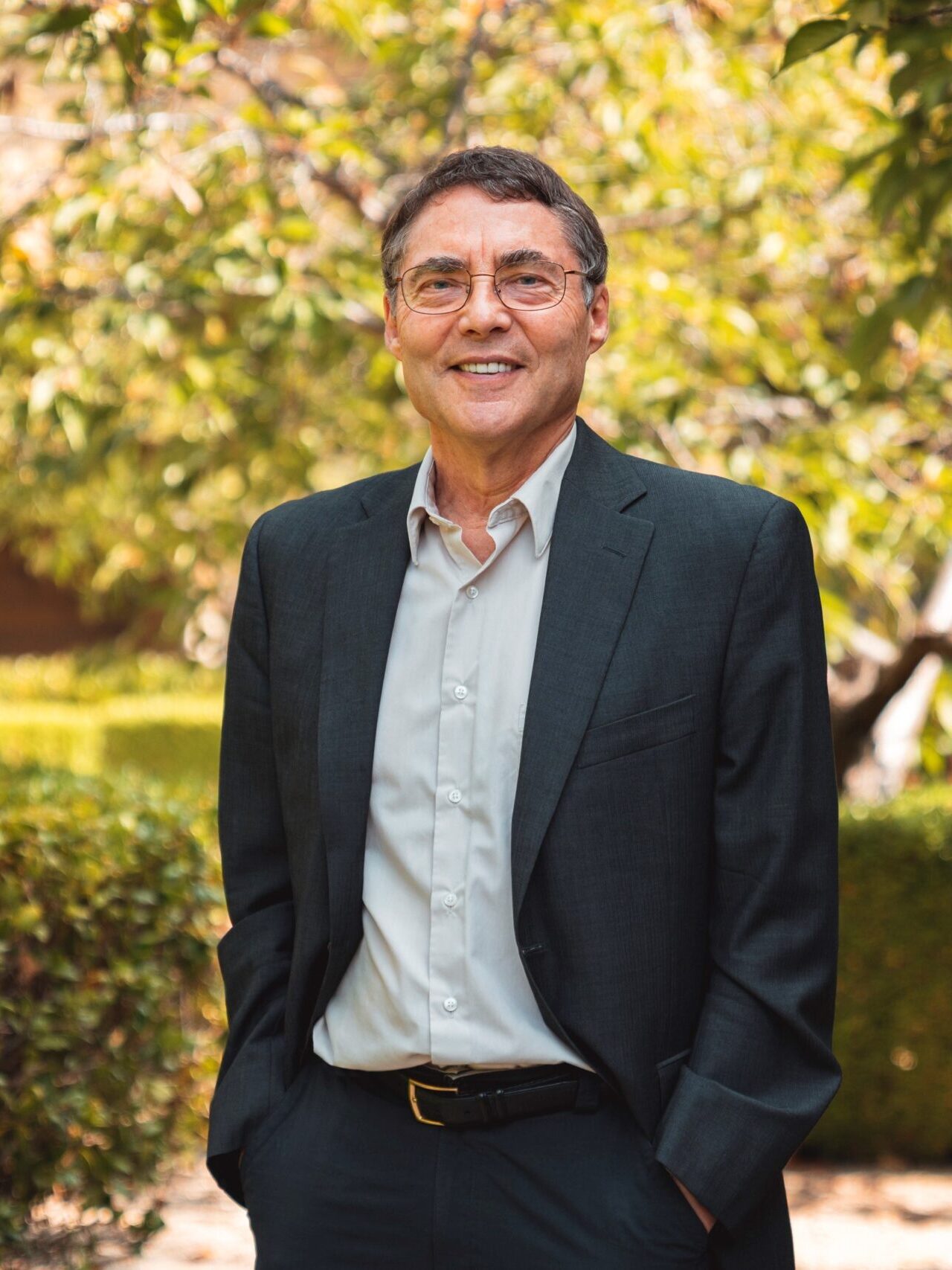
Plenary Sessions – Carl Wieman, Ph.D.
“Teaching & Learning Science in the 21st Century”
Friday, April 22nd
11:00 a.m. to 12:30 p.m. – Plenary Talk
5:30 p.m. to 6:30 p.m. – Fireside Chat
Guided by experimental tests of theory and practice, science and engineering have advanced rapidly in the past 500 years. Education in these subjects, however, guided primarily by tradition and dogma, has remained largely medieval. Recent research on how people learn, combined with careful experiments in university classrooms, is now revealing much more effective ways to teach and evaluate learning than is currently used in most classes. I will discuss these results, what they tell us about principles of learning, and their effective implementation in science courses. This research is setting the stage for a new approach to teaching that can provide the relevant and effective science education for all students that is needed for the 21st century. It also shows better ways to evaluate teaching quality, and it reveals that traditional attitudes about learning and the introductory science curriculum can be inadvertently sustaining systemic discrimination.
Dr. Carl Wieman is a Professor of Physics and Education at Stanford University. Wieman has conducted extensive experimental research in atomic physics (Nobel Prize in Physics, 2001) and university science and engineering education (Carnegie Foundation Professor of the Year, 2004). He founded PhET, which provides online interactive simulations that are used 100 million times/year to learn science, and published a book, Improving How Universities Teach Science: Lessons from the Science Education Initiative (2017). He is currently studying expertise and problem-solving in science and engineering disciplines, and how this can be better measured and taught. Most recently, he was awarded the 2020 Yidan International Prize for Education Research.
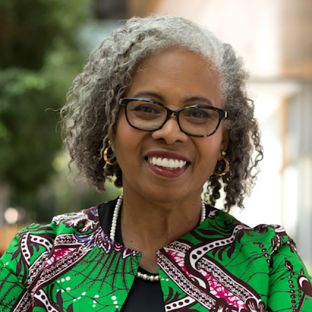
Plenary Sessions – Gloria Ladson-Billings, Ph.D.
“Critical Race Theory in Education”
Friday, April 29th
9:00 a.m. to 10:15 a.m.
Dr. Gloria Ladson-Billings is the former Kellner Family Distinguished Professor of Urban Education in the Department of Curriculum and Instruction in the Department of Educational Policy Studies at the University of Wisconsin-Madison. Internationally known as a scholar of culturally relevant pedagogy and critical race theory, she is the author of the critically acclaimed books The Dreamkeepers: Successful Teachers of African American Children and Crossing Over to Canaan: The Journey of New Teachers in Diverse Classrooms, and numerous journal articles and book chapters. Most recently Teachers College Press published Critical Race Theory in Education: A Scholar’s Journey (2021), a collection of Dr. Ladson-Billings’ most influential and widely cited writings. She is the immediate past president of the National Academy of Education and president of the American Education Research Association (AERA) in 2005-06. In 2018 Dr. Ladson-Billings was elected to the prestigious American Academy of Arts & Sciences.
OPID 2022 Spring Conference Committee
Sylvia Tiala, Chair (UW-Stout). Members: Verda Blythe (UW-Madison), Abhimanyu Goush (UW-Stout), Veronica Justen (UW-River Falls), Bryan Kopp (UW-La Crosse), Mary-Beth Leibham (UW-Eau Claire), Heather Pelzel (UW-Whitewater), Erin Speetzen (UW-Stevens Point), Jamie White-Farnham (UW-Superior).
Questions?
Programmatic inquiries may be directed to:
- Fay Akindes, Director of Systemwide Professional and Instructional Development, Universities of Wisconsin, fay.akindes@wisconsin.edu, (608) 263-2684.
- For technical support contact: Diane Waters, Program Associate, Office of Academic Affairs, UW system, OPID@lists.wisconsin.edu, (608) 262-8778.