
UW-Eau Claire
Assistant Professor
Department of Education Studies
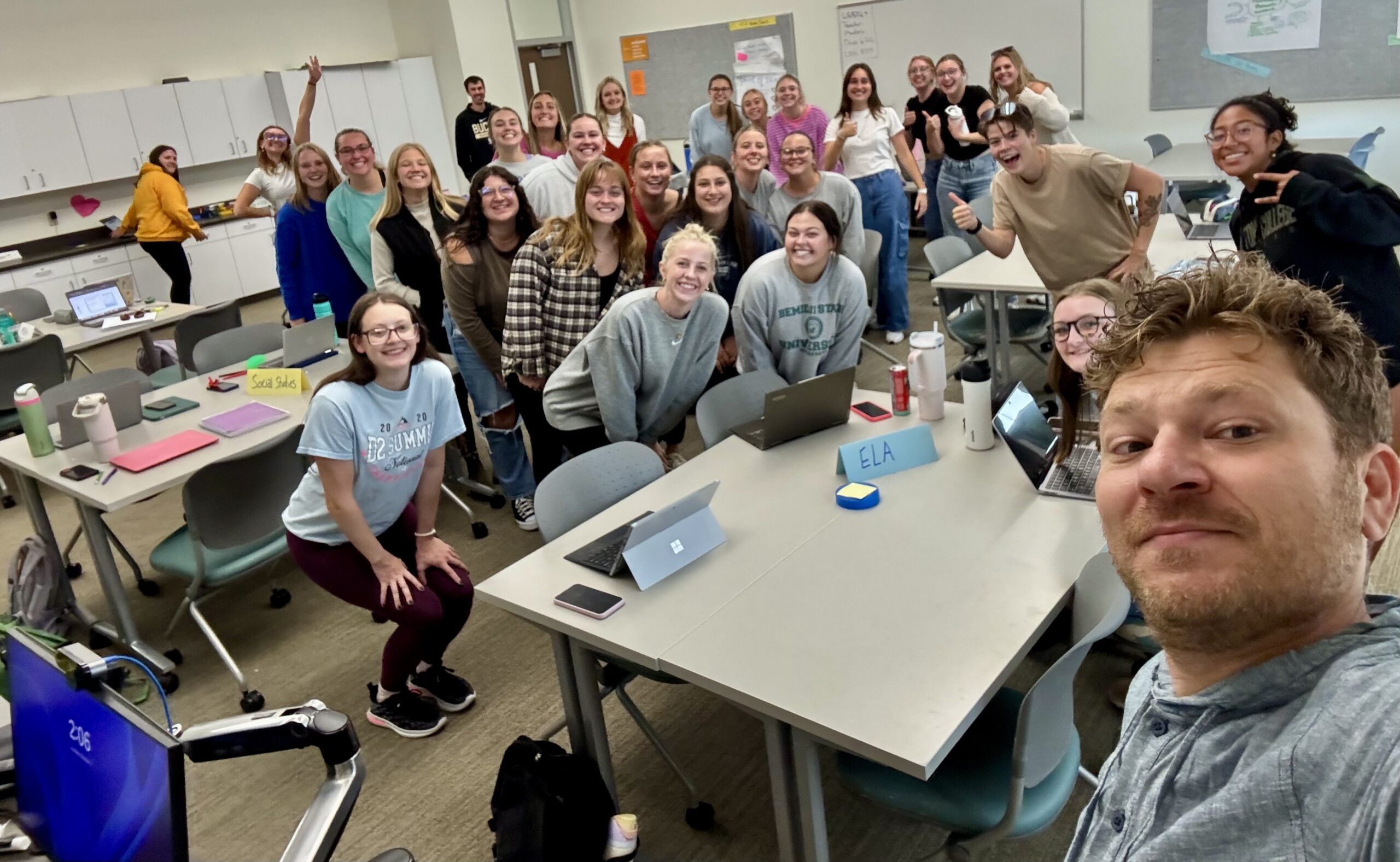 Boris Krichevsky is an Assistant Professor at the College of Health and Human Sciences. His research is situated at the cross section of teacher education, educational policy, and organizational theory. Using qualitative methods, Dr. Krichevsky explores two interrelated strands: (1) the role of cultural and historical conditions in interorganizational and cross-sector collaboration; and (2) national, state, and local education policies that enable and constrain the preparation and support of teachers. Drawing on cultural-historical activity theory (CHAT), he believes that transformative teaching-and-learning is a collective activity oriented toward evolving shared goals. As a teacher-educator and former special education teacher, he engages in practices that honor ever-shifting intersectional identities of individual students while simultaneously (re)imagining new subjectivities in the learning-to-teach process. Dr. Krichevsky has designed and taught undergraduate and graduate courses on cross-disciplinary dis/ability studies, culturally responsive classroom management and social studies methods.
TEACHING AND LEARNING PHILOSOPHY
My approach to classroom instruction, professional knowledge and targeted personal professional growth is deeply grounded in both critical and constructivist learning theories. From a constructivist perspective, I presume that educators and learners enter the classroom with an evolving set of experiences that we look toward to make sense of the world around us. These experiences and prior knowledge bases are informed and mediated by our multifaceted identities and varying socio-cultural backgrounds. Faculty, instructors, and students engage in meaning making with themselves, each other – and in my context of teacher preparation, with their future students – when the ideas they confront create dissonance with previously held foundations of knowledge based on experiences. To this end, I believe that learning is an expansive, negotiated, and transformative process, and when we draw on reflexive discourse and interaction, moments of dissonance or tension can lead to transformative change.