

OPID Webinar Series 2026-27
Welcome to the third of OPID’s Fall Webinar series on Teaching and Learning in a Generative AI World. The series will be recorded for future viewing. Resources for past OPID Webinars are available here – Fall 2023 and Fall 2024. Funding for OPID’s Webinar series is provided by UWSA’s Office of Academic Affairs.
Webinars will be recorded and made available on this page.
AI-Aware UW Educators – Humanities & Social Sciences
Friday, Oct. 23, 2 pm to 3 pm – Zoom
- Eric Loeppe, Associate Professor, Political Science, and Co-Director, Center for the Advancement of Teaching, Learning, Scholarship, and Technology (CATLST), UW-Whitewater
- Adrienne Viramontes, Professor & Chair, Communication, UW-Parkside
- Shevaun Watson, Associate Professor, English, and Director, First-Year Writing Program, UW-Milwaukee

Dr. Eric Loepp is Associate Professor in the Department of Politics, Government, and Law and Co-Director of the Center for the Advancement of Teaching, Learning, Scholarship, and Technology at the University of Wisconsin-Whitewater. He teaches courses and conducts research in American government, political behavior, and research methods. He is the recipient of the American Political Science Association’s 2018 CQ Press Award for Teaching Innovation. He was elected by his peers to serve in the Faculty Senate at UW-Whitewater.
Eric was a reviewer of The Norton Guide to AI-Aware Teaching. He wrote “How Personalizing Assessments Can Elevate Learning” in The Norton Learning Blog. And was a guest on Intentional Teaching, a podcast produced by Derek Bruff. Eric has developed personalized assessments to elevate his teaching of political science.
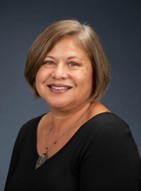
Adrienne Viramontes is Professor and Chair of the Communication Department at UW-Parkside. The department received UW Board of Regents’ Teaching Excellence Award for its exemplary high-impact practices throughout the major. She holds a Ph.D. in Speech Communication from Southern Illinois University, and Bachelors and Masters degrees from Purdue University Calumet. Adrienne specializes in identity, intersectionality, qualitative research methods, and Chicana/o history and identity. She was elected by her peers to serve on UW-Parkside’s executive faculty senate committee.
Adrienne and her Communication colleagues participated in an AI Workshop conducted by the Center for Excellence in Inclusive Teaching & Learning at UW-Parkside. She has integrated AI into her courses, particularly a two-part Research Methods class and Senior Seminar.
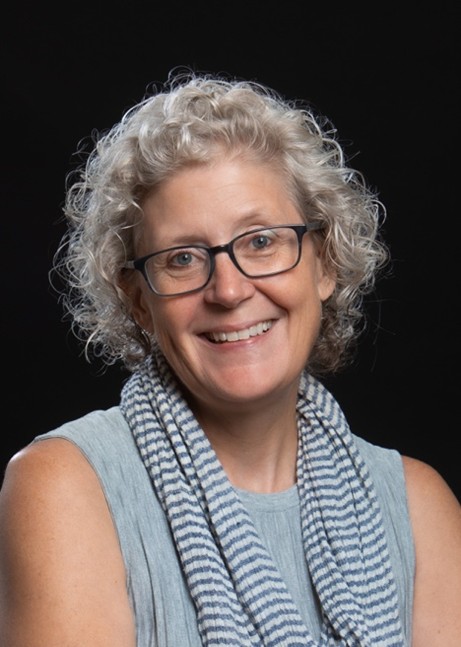
Shevaun Watson is Associate Professor of English and Director of First-Year Writing at UW-Milwaukee. Her research and teaching focus on composition studies, writing program administration, rhetoric studies, and public memory. Currently, she is editing a book on heritage tourism and Early America with Dr. Cathy Rex (UW-Eau Claire), and completing a manuscript on public memory and heritage tourism in Charleston, SC.
Her work on AI is two-fold. First, in Fall 2024 she implemented a Critical AI Literacy curriculum in English 101 and continues to refine that approach each year. This work involves not only student-facing curriculum, but extensive faculty development around AI in the writing program. Second, along with Cassandra Phillips (UW-Milwaukee), Shevaun researches the intersection of AI and reading among first-year college students. They received a Northwestern Mutual Data Science Institute grant to expand this research project.
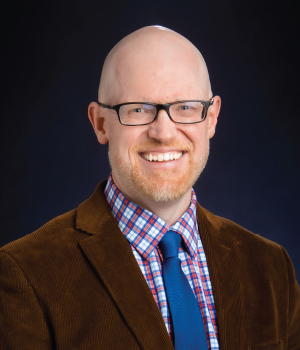
Moderated by Lane Sunwall, Ph.D. History; Teaching and Learning Consultant, Center for Advancing Student Learning (CASL), Active Teaching Lab Organizer
UW-Milwaukee

To register you will need to use your UW email address. That address will need to be linked to your Zoom account to attend the meeting.
Resources
Publications
AI-Aware UW Educators – STEM and Professional Services
Friday, Nov. 13, 2 pm to 3 pm – Zoom
- Jennifer Grant, Biology, UW-Stout Polytechnic
- Becca McLagan, College of Nursing, Health Professions, and STEM, UW-Oshkosh
- Mehdi Ropaaei, Electrical & Computer Engineering, UW-Platteville
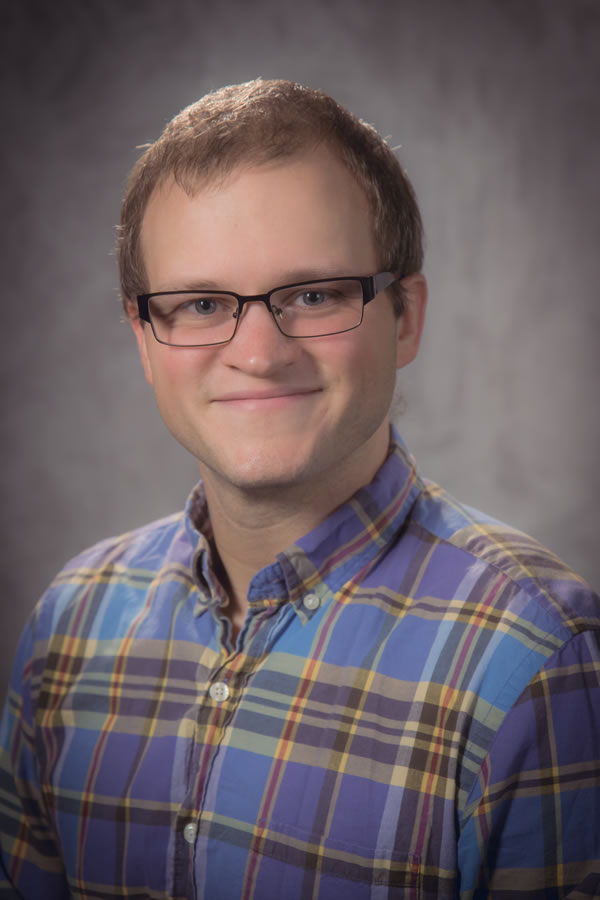
Moderated by Joshua Stangle, Ph.D. Mathematics; Faculty AI Coordinator
UW-Superior
To register you will need to use your UW email address. That address will need to be linked to your Zoom account to attend the meeting.
Resources
Publications
Teaching and Learning with Integrity in a Postplagiarism Age:
Considerations for the Ethical Use of GenAI
Friday, Sept. 18, 2026 – 2 pm to 3 pm – Zoom
Dr. Sarah Elaine Eaton
Professor and Chair, Leadership, Policy, and Governance
Founder and Director, Postplagiarism Research Lab
Werklund School of Education, University of Calgary
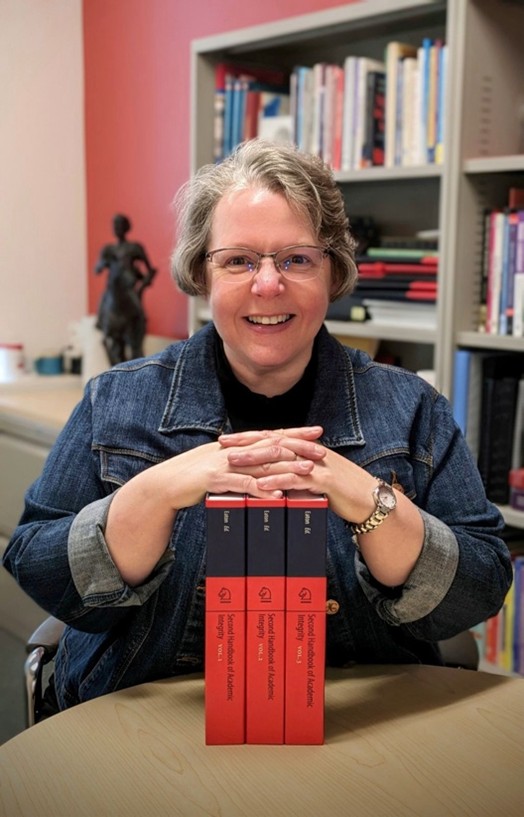
What does it mean to teach, learn, and live in a postplagiarism age? What are the implications of emergent AI technologies for academic integrity in the coming academic year?
This session is not about how to use specific tools. Instead, we will delve into the broad ethical and practical implications of AI for education. A key takeaway is that a comprehensive and holistic view of academic integrity is about more than preventing plagiarism or cheating; it is about ethical decision-making in and beyond the classroom. In a multi-stakeholder approach to academic integrity, everyone within the educational system holds a responsibility for ethical conduct, including how we use technology today and into the future.
Sarah Elaine Eaton is a Professor and Research Chair in the Werklund School of Education and Chair, Leadership, Policy, and Governance, at the University of Calgary. She holds a concurrent appointment as an Honorary Associate Professor, Deakin Learning Futures, Deakin University, Australia. Professor Eaton’s research focuses on academic ethics in higher education. Her work can be found in the Canadian Journal of Higher Education, the British Educational Research Journal, Educational Policy, and the Journal of Academic Ethics, among other places. Dr. Eaton is the Editor-in-Chief of the International Journal for Educational Integrity (Springer Nature), a Q1 (Education) journal published by BMC Springer. Dr. Eaton was the co-founder (2018) and co-editor (2018-2020) of Canadian Perspectives on Academic Integrity.
Dr. Eaton is an internationally recognized authority in the field of academic ethics. In 2020 she received the National Research and Scholarship award from the Canadian Society for the Study of Higher Education (CSSHE) for her contributions to research on academic integrity in Canadian higher education. In 2022, she received the outstanding research award from the European Network for Academic Integrity (ENAI).
To register you will need to use your UW email address. That address will need to be linked to your Zoom account to attend the meeting.

Moderated by Kristin Koepke, Director, Center for Advancing Teaching and Learning,
UW-La Crosse
Resources
Publications
Sarah Elaine Eaton
Second Handbook of Academic Integrity (2nd ed.), (Eaton, ed., 2024)
Fake Degrees and Fraudulent Credentials in Higher Education (Eaton, Carmichael, & Pethrick, eds., 2023)
Ethics and Integrity in Teacher Education (Eaton & Khan, eds., 2023)
Contract Cheating in Higher Education: Global Perspectives on Theory, Practice, and Policy (Eaton, Curtis, Stoesz, Clare, Rundle, & Seeland, eds., 2022)
Plagiarism in Higher Education: Tackling Tough Topics in Academic Integrity (2021)
AI-Aware Teaching: A Workshop for Faculty across Disciplines
Friday, Sept. 25, 2 pm to 3:30 pm- Zoom
Dr. Annette Vee
Associate Professor of English and Faculty Liaison for AI at University of Pittsburgh
Co-Author, The Norton Guide to AI-Aware Teaching
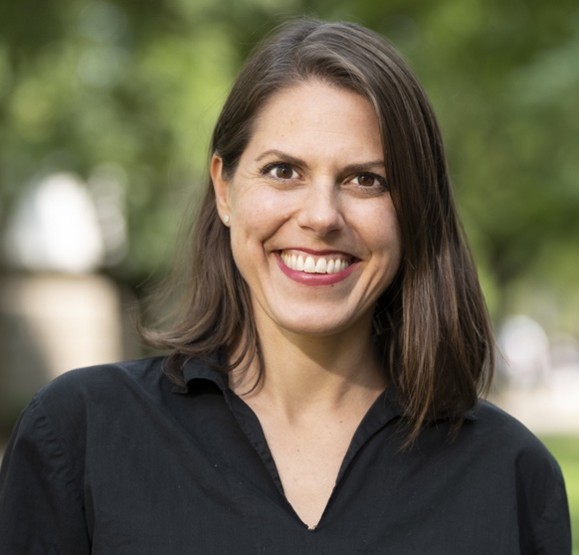
AI has arrived in our classrooms, and students bring complex responses to it: curiosity, anxiety, fatigue, and pragmatic calculation about when and whether to use it. How can college instructors make choices about AI that serve their courses and their students’ learning? “AI-aware” teaching means understanding how AI has reshaped the landscape of teaching and learning, then leading students along new paths through it to meet your course’s learning objectives. Whether you want to resist AI or engage with it, being aware of how AI changes learning will help you support your students and meet your own pedagogical goals. This talk will introduce The Norton Guide to AI-Aware Teaching (Vee, Watkins, and Bruff), the Universities of Wisconsin’s common read, and highlight teaching innovations by educators in Wisconsin. The book and the talk aim to help you consider the impact of AI on your curriculum, courses, and assignments, and realign your learning outcomes in light of AI’s problems and possibilities.
Annette Vee is Associate Professor of English and Faculty Liaison for AI at University of Pittsburgh. At Pitt, she facilitates research and faculty development on AI; outside of Pitt, she gives keynotes and workshops related to AI. With Marc Watkins and Derek Bruff, she co-wrote The Norton Guide to AI-Aware Teaching, which is out now with W.W. Norton. She lived in Wisconsin for 10 years and got her Ph.D. from the UW-Madison; she misses the lakes, brats, cheese, and people of Wisconsin.
Future Webinars will spotlight AI-aware Universities of Wisconsin educators.
To register you will need to use your UW email address. That address will need to be linked to your Zoom account to attend the meeting.
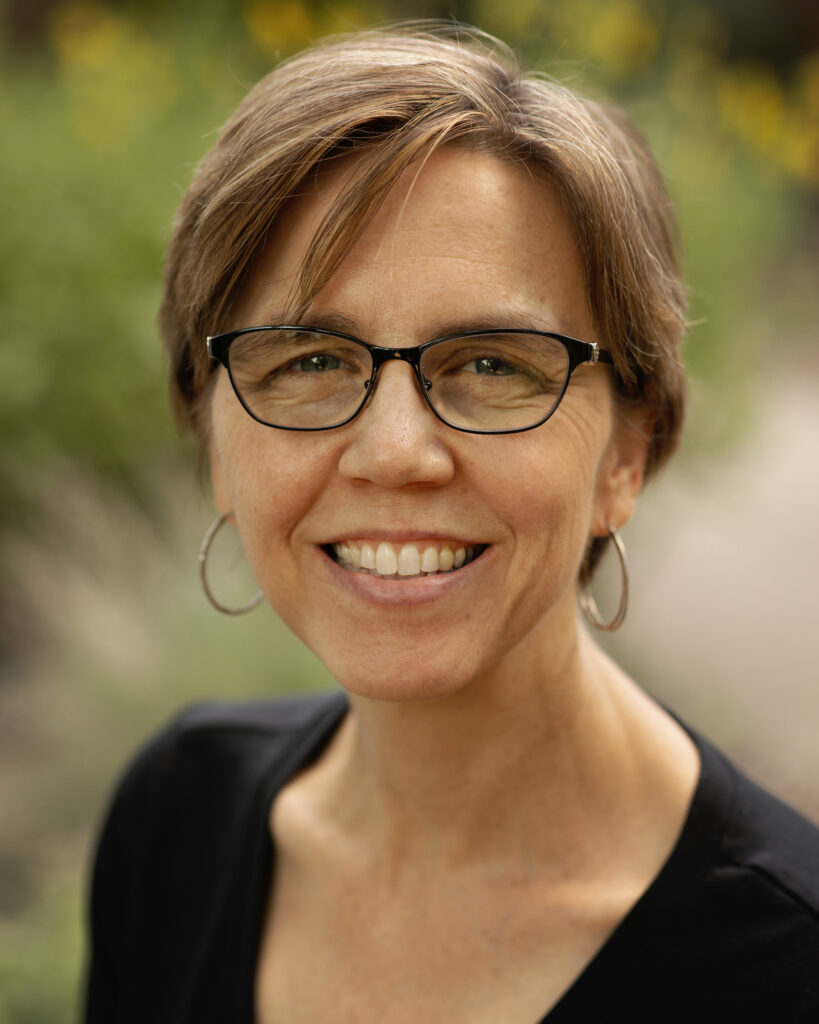
Moderated by Dr. Cyndi Kernahan,
Director, Center for Excellence in Teaching & Learning, and Professor of Psychology, UW-River Falls
Resources
Publications
Annette Vee
The Norton Guide to AI-Aware Teaching co-authored with Marc Watkins and Derek Bruff.
Coding Literacy: How Computer Programming Is Changing Writing (MIT Press, 2017)
TextGenEd: Teaching with Text Generation Technologies, which she co-edited.
Substacks AI & How We Teach Writing and Computation & Writing
Questions?
Programming inquiries may be directed to:
Fay Akindes, Director of Systemwide Professional and Instructional Development, UW system, fay.akindes@wisconsin.edu, (608) 263-2684.
For technical support contact:
Diane Waters, Program Associate, Office of Academic Affairs, UW system, OPID@lists.wisconsin.edu, (608) 262-8778.