UW-Stevens Point
Professor and Department Chair
Political Science
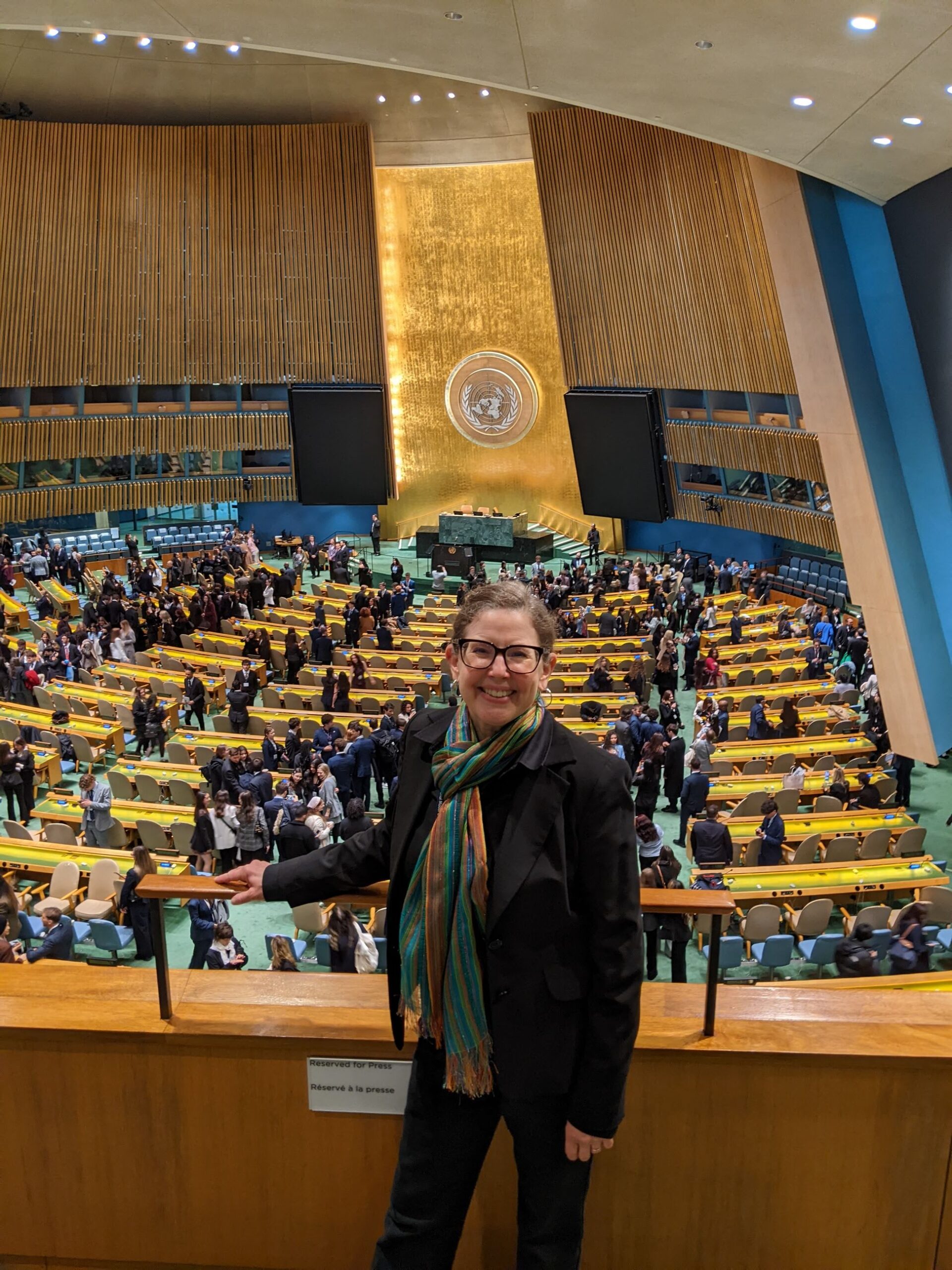
Jennifer N. Collins is professor and chair of the Political Science Department at the University of Wisconsin-Stevens Point. She is author of Social Movements and Radical Populism in the Andes: Ecuador and Bolivia in Comparative Perspective (Lexington Books, 2022), which was recognized with an Honorable Mention by the Ecuadorian Studies Section of LASA in 2024. She has written and published on Andean politics, the new left, populism, and social and indigenous movements and parties and served for many years as a contributing editor to the Handbook of Latin American Studies. She is the recipient of two Fulbright fellowships for field research in Ecuador and Bolivia. A long-standing board member of the Wisconsin Institute for Peace and Conflict Studies (WIPCS), she currently serves as WIPCS Executive Director. UWSP has recognized her with three university-wide awards for excellence in teaching, scholarship, and service. As part of her mentoring work with students, Dr. Collins serves as faculty advisor to two UWSP student organizations, the United Nations Student Organization and the Pointers Vote Coalition. Dr. Collins earned her Ph.D. in Political Science from the University of California, San Diego (UCSD) and her bachelor’s degree in government and Third World studies from Oberlin College.
Teaching and Learning Philosophy
I view teaching as an opportunity to challenge students to think critically and to see the world and their place in it in new ways. My approach is based on the conviction that learning should not be solely aimed at acquiring knowledge for knowledge’s sake but should be a process that empowers and equips students to become engaged citizens. The materials and topics I assign together with the active learning methods I employ in the classroom aim to help students develop a sense of their own political agency and efficacy, realize that they have obligations as national and global citizens, and develop a sense of empathy for others. Things I strive for are active student engagement with the material, the development of critical thinking skills, expanding students’ views of the possible by exposing them to ideas and ways of organizing politics and society that are different from the norm in the United States, and finally, emphasizing the real world relevance of the ideas and theories we are studying.
My classes do not shy away from controversial or difficult topics. I encourage students to consider multiple perspectives and to try and understand where another person may be coming from even if they disagree. In this time of polarized politics, I believe the university classroom must be a place where students can safely engage in democratic dialogue and debate. It must remain a space in which diverse ideas are encountered and grappled with in all their complexity. In this way we help students develop into empowered and engaged citizens and curious, critical thinkers.