
UW-La Crosse
Associate Professor
Archaeology and Anthropology
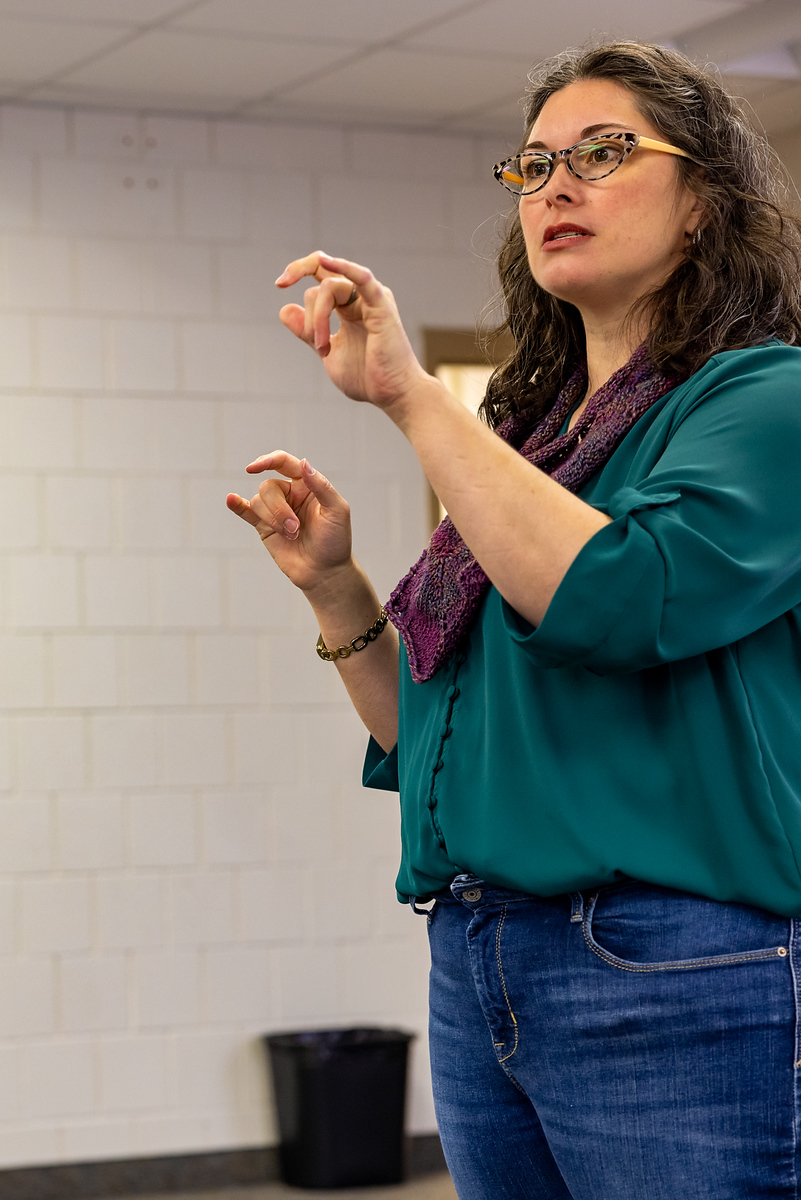 I am an Associate Professor in the Department of Archaeology and Anthropology, specializing in cultural and linguistic anthropology. I joined UWL in 2013, where I currently teach courses on language and inequality, Eastern European cultures, ethnographic methods, and the cultural anthropology thesis capstone. I also co-lead a summer study abroad program, Culture and Politics in Budapest, Hungary, and have completed Collaborative Online International Learning projects with a Ukrainian colleague into two linguistic anthropology courses. My research focuses on issues of identity and community belonging among youth, focusing on language and practice. In the past, I have examined how young people navigate social and political change in Ukraine and in the Ukrainian diaspora in the United States. My WTFS project focuses on a whole-class collaborative role-playing game I designed for my 70+ student, General Education, introduction to anthropology class. I aim to assess to what extent the game increases students’ understanding of core course concepts, the value of cultural relativism, and their tolerance of cultural differences. Outside of work, I spend time with my spouse and two kids, knitting when the cat and kids allow me to, consuming science fiction everything, and acquiring LEGO. Currently, I aspire to teach a course on the Anthropology of Games & Play, as well as to become a certified LEGO teacher trainer.
TEACHING AND LEARNING PHILOSOPHY
In my courses, I expose students to a wide variety of cultural beliefs, behaviors, and practices. My job as a teacher-scholar is to help them see how anthropology can be a lens through which they can make sense of the similarities and differences among people worldwide. I believe that exposure to the anthropological perspective, with its emphasis on holistic, cross-cultural, and empirical research, can help students gain a better understanding of the diversity of the human experience, from our earliest beginnings to the multiethnic, multilingual, globalized world in which we live. I also aim for our students to master skills that will benefit them in a variety of fields beyond their academic career. Such skills include effective written communication, critical inquiry, and an appreciation for diversity, in addition to the hands-on skills learned through the research process.
My main teaching objectives are:
• To help students reflect on and revise the misconceptions they have about human biological and cultural differences
• To help students see how theories and concepts can be used to analyze and explain real-world experiences
• To help students connect course materials to their lived experiences, through in-class examples, co-constructed activities, and hands-on, research-based projects with flexibility in topic and assessment format
• To demonstrate the applicability of anthropological skills to a wide range of career paths, with community engaged learning projects